
Let’s be honest, those first few weeks on the job pretty much decide if a new hire is going to thrive or just… survive.
Far too many companies treat onboarding like an admin to-do list: get the paperwork signed, hand over a laptop, and point them toward their desk. This purely transactional approach is a surefire recipe for disengagement and early turnover. Effective onboarding strategies for teams should focus on building relationships and fostering a sense of belonging from day one. By creating personalized experiences and providing ongoing support, organizations can significantly enhance employee engagement and retention. Investing in these approaches not only benefits new hires but also strengthens team dynamics and overall company culture.
It leaves new employees feeling isolated, overwhelmed, and completely in the dark about what success even looks like in their new role.
Why Most New Employee Onboarding Fails
A weak onboarding process creates a nasty ripple effect. You’re not just losing one employee; you're dealing with wasted recruitment costs, a dip in team morale from the revolving door of colleagues, and stalled projects that lose all momentum.
When a new hire walks, the team they leave behind has to pick up the slack. That leads directly to burnout and frustration.

The Staggering Cost of a Bad Start
The numbers really don't lie. Recent data shows that nearly 30% of employees bail on a new job within the first 90 days, and they almost always point to a poor onboarding experience as the culprit. This kind of early churn is incredibly expensive.
On the flip side, companies that get it right—the ones with a structured onboarding program—see a 50% improvement in new hire retention. They're also 69% more likely to keep those employees for at least three years.
The difference is crystal clear: a structured process isn't just a "nice-to-have" HR function. It's a strategic investment that directly impacts productivity, engagement, and your bottom line.
Most failed onboarding programs don't address the long-term needs of a new hire, which is exactly what pushes them out the door. By focusing on strategies that show you how to improve employee retention from the very beginning, companies can dodge these common pitfalls. It means shifting your mindset from a one-week admin sprint to a strategic, months-long journey of real integration and support.
Shifting from Paperwork to Empowerment
The fix is to build an onboarding framework that puts people ahead of processes. A truly great program is designed to make a new hire feel welcomed, prepared, and confident from day one. It's a deliberate journey that unfolds over their first 90 days, not just the first week.
Here’s what that shift looks like in practice:
- From Information Dump to Guided Learning: Instead of burying them in documents, give them a curated learning path with clear, achievable milestones.
- From Isolation to Connection: Don't leave networking to chance. Actively facilitate introductions and assign an "onboarding buddy" to help them navigate the social side of things.
- From Ambiguity to Clarity: Set crystal-clear expectations with a 30-60-90 day plan. They should know exactly what they need to accomplish to be successful.
By making this fundamental shift, you can turn a new hire’s experience from a stressful, confusing ordeal into a powerful foundation for their long-term success with your company.
Building Your Onboarding Experience Before Day One
The moment a candidate says "yes" is a huge win. But what happens next? The period between them accepting the offer and actually starting is a golden opportunity. Too often, it’s a communication dead zone that breeds anxiety and doubt.
A strong new employee onboarding process closes this gap, turning pre-start jitters into genuine excitement. This initial phase, known as pre-boarding, is your first real chance to prove they made the right choice. Instead of radio silence, you can handle the boring admin stuff and start building a real connection.
This way, day one isn't a chaotic scramble of paperwork and IT issues. It's a smooth, welcoming entry into your company culture.
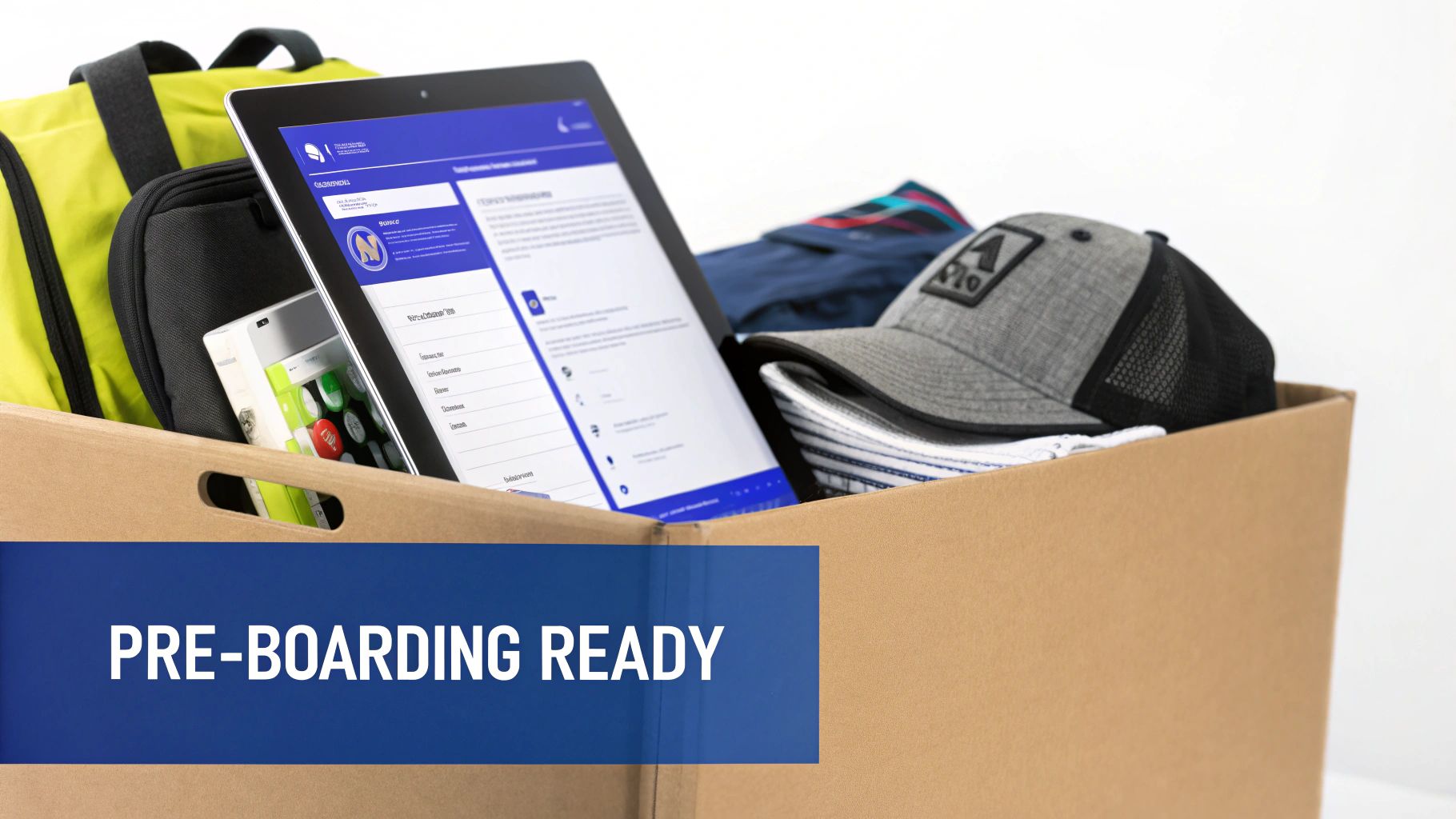
Crafting a Practical Pre-boarding Checklist
A thoughtful pre-boarding checklist is your secret weapon. It’s part logistics, part human connection. It systematically knocks out all the first-day friction while making your new hire feel like part of the team before they even walk through the door.
This isn’t just about being efficient. It’s about showing them you're a professional, prepared, and genuinely excited for them to join.
Here’s a simple pre-boarding plan that covers all the bases:
- Get the Logistics Done Early: Send all the necessary HR and payroll documents digitally. Let them fill things out on their own time, not during their first morning when they'd rather be meeting the team.
- Set Up Their Digital Life: Get their email account, software licenses, and access to key systems ready to go. Nothing screams "we weren't ready for you" like making them wait a week for a software license.
- Ship a Welcome Kit: This is a classic for a reason. A small package with company swag—a branded mug, a notebook, a comfy t-shirt—is a powerful gesture. It’s a tangible symbol of belonging that arrives before they do.
- Send a "Hello" from the Team: A simple, personalized email or a quick video message from their direct team members can do wonders for calming nerves and building rapport early on.
For a deeper dive, you can learn more about building a complete new employee onboarding checklist that covers every stage of the process.
Providing a Central Hub for Early Learning
Giving new hires early, low-pressure access to foundational information is a game-changer. A centralized knowledge hub lets them explore key documents at their own pace, satisfying their curiosity and helping them feel way more prepared.
Self-guided discovery is far more effective than trying to cram everything into a day-one info-dump.
The goal of pre-boarding isn't to assign work; it's to provide context. By offering a sneak peek into the company's world, you empower them to connect the dots faster once they start.
Think of this digital welcome packet as an open invitation to get familiar with their new environment. Make it easy to navigate and fill it with essential resources they can browse whenever they have a spare moment.
What to Include in Your Pre-boarding Hub
Your central hub should be a single source of truth, offering a curated glimpse into how your company works and who they’ll be working with. By centralizing this info, you create a consistent, professional experience for every new hire.
Here are a few must-haves for your hub:
- The Company Handbook: Give them the complete guide to your policies, values, and mission. This is their go-to for everything from vacation policy to cultural norms.
- A Visual Org Chart: Help them understand the team structure and see where they fit in. Bonus points for including photos and brief bios to put faces to names.
- Foundational SOPs: Share a few core Standard Operating Procedures that are relevant to their role or the company as a whole. This introduces them to your processes without being overwhelming.
- A 'First-Week Agenda' Preview: Let them know what to expect. This simple outline helps manage expectations and seriously reduces that first-day anxiety.
Designing an Unforgettable First Week
The first week is where the rubber meets the road. All that pre-boarding excitement and the promises you made about your company culture? They’re officially being put to the test. A well-designed first week can take a new hire from a bundle of nerves to a confident, integrated team member who’s ready to start contributing.
This period isn't about throwing them into the deep end or drowning them in a firehose of information. It's about deliberately mixing connection, learning, and some initial, manageable tasks to build momentum. Get this right, and their first five days will be memorable for all the right reasons.
Making Day One About People, Not Paperwork
The main goal for day one is simple: connection. If you handled pre-boarding correctly, the boring administrative stuff is already done. That frees up the entire day to focus on making your new hire feel genuinely welcomed and comfortable.
Kick things off with a warm, personal welcome from their direct manager. A quick tour of the office—pointing out the important spots like the kitchen, meeting rooms, and their own desk—goes a long way. The most important part of the morning, though, is introducing them to their immediate team in a relaxed setting, maybe over a coffee.
The first day sets the tone for an employee’s entire experience. Making it about human connection instead of process reinforces that they've joined a team, not just a company.
For remote folks, this means being intentional with video calls. Schedule a team-wide welcome call, but also a few individual one-on-ones to mimic those casual "hellos" they'd get in the office. Our guide on crafting the perfect first day checklist has a ton of detailed steps to make sure this day lands perfectly.
Structuring a Balanced Week of Learning and Doing
Once you've nailed day one, the rest of the week should build on that positive foundation. The key is finding the right balance between structured training, hands-on tasks, and getting to know people. Too many presentations and their eyes will glaze over. Throw them into complex projects without guidance, and you’ll just create anxiety.
Here's a solid game plan for the week:
- Introduce Core Tools Early: Don't wait. Dedicate time to a walkthrough of the essential software they'll live in every day. Make sure they have access to SOPs or short video tutorials for each tool so they can refer back to them later.
- Schedule Key One-on-Ones: Arrange short meetings with key people outside their immediate team. A quick chat with someone from a department they'll collaborate with can provide priceless context about how their role fits into the bigger picture.
- Assign a Small, Achievable First Task: Give them a low-stakes project they can realistically complete by the end of the week. This isn't about productivity; it's about giving them an early win to build confidence and letting them immediately apply what they're learning.
This approach ensures the new employee onboarding feels purposeful and productive from the get-go.
Building a Centralized First Week Training Path
To keep learning manageable and consistent for everyone, create a role-specific "First Week Training Path" in a central knowledge base like Whale. This becomes their single source of truth, guiding them through the must-know info without overwhelming them.
This path should be self-paced and interactive. Nobody wants to read long, dry documents for hours. Modern onboarding uses a mix of engaging formats to keep energy levels high.
Your training path should include a variety of content:
- Interactive Guides: Use step-by-step walkthroughs for core processes, like how to submit an expense report or the basics of your project management tool.
- Quick Video Tutorials: Short, two-minute videos are gold for explaining a complex idea or demoing a software feature. Fun fact: our brains process visual information 60,000 times faster than text, making video an incredibly powerful learning tool.
- Simple Quizzes: After a module on a key SOP, a short, five-question quiz can help lock in the information and confirm they're on the right track, all in a low-pressure way.
By the end of the week, your new hire should feel like they belong, understand the fundamentals of their role, and know exactly where to find the resources they need to succeed. This strong start is the launchpad for their entire journey with your company.
Mapping Out the First 90 Days for Success
The first week is a critical sprint, but great new employee onboarding is really a marathon. True, meaningful integration doesn't happen overnight; it unfolds over the first three months. Without a clear road map, both new hires and their managers are just guessing, which leads to confusion, missed expectations, and a painfully slow ramp-up period.
That's where a structured 30-60-90 day plan comes in. Think of it as a strategic guide that breaks down the huge task of "getting up to speed" into manageable, achievable chunks. This framework provides clarity and sets a predictable pace, empowering everyone to track progress against real goals.
The First 30 Days: Learning and Absorbing
Month one is all about orientation and soaking it all in. The main goal here is for the new hire to absorb as much as they can about the company culture, key processes, and the tools they'll be using every day. They aren't expected to be a top performer yet; they're building the foundation for everything that comes next.
During this phase, their time should be spent on:
- Understanding the Culture: This means joining team meetings, having one-on-ones with colleagues, and just getting a feel for how everyone communicates.
- Mastering Core Systems: This involves completing foundational training on essential software, platforms, and internal processes. No skipping the basics!
- Clarifying Role Expectations: The new hire needs to work closely with their manager to nail down the key responsibilities and performance metrics for their position.
This is a period of intense listening and learning. The focus is on giving them all the resources they need to understand how things work and where they fit in.
The Next 30 Days: Contributing and Collaborating
With a solid foundation in place, the second month is where the shift from passive learning to active contribution begins. The new employee should start applying what they've learned to smaller, well-defined tasks and collaborative projects. This is where they start to build confidence and really show they're getting it.
Goals for this period often include:
- Contributing to Team Projects: Taking ownership of a specific part of a larger project, with clear guidance and support from the team.
- Handling Initial Independent Tasks: Managing routine responsibilities with less direct supervision.
- Building Cross-Functional Relationships: Reaching out and engaging with people in other departments they'll be working with regularly.
This stage is crucial for building momentum. When a new hire successfully completes their first few tasks, they start to feel like a valuable, contributing member of the team—and that feeling is a powerful motivator.
Regular check-ins during this phase are an absolute must. Managers can provide constructive feedback, help clear any roadblocks, and make sure the employee feels supported as they take on more responsibility.
The Final 30 Days: Owning and Executing
By the time day 90 rolls around, the employee should be operating with much more autonomy. The training wheels are coming off, and the expectation is that they're taking full ownership of their core responsibilities. They should be proactively identifying what needs to be done, managing their own workload, and contributing to team goals with minimal hand-holding.
The infographic below shows how this journey starts, from the initial welcome to setting the stage for these longer-term goals.
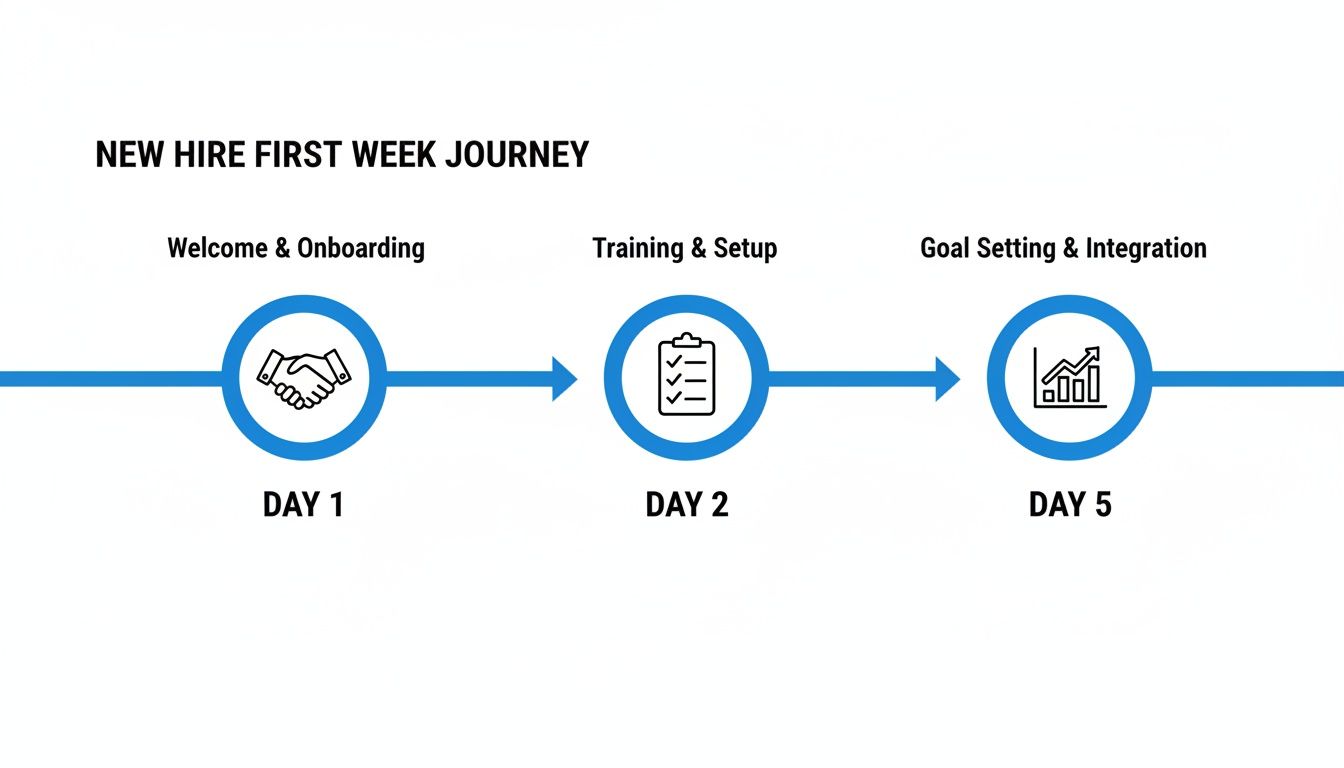
This visual timeline shows how a well-planned first week lays the groundwork for the employee to start contributing and, eventually, owning their role.
This final phase is all about solidifying their place on the team. They should be comfortable navigating company processes and confident enough to suggest improvements. The 90-day mark is the perfect time for a more formal performance review to celebrate their progress and set goals for the next quarter.
This structured approach massively shortens the time it takes for a new hire to become a fully productive team member. The median time-to-productivity for knowledge workers is 65 days, but this can drag on for months in more technical roles. Companies with a standard onboarding process report 50-70% higher new hire productivity and can boost job performance by as much as 114%. You can discover more onboarding insights and statistics that really drive home the impact of a well-planned journey. By turning the ramp-up from a guessing game into a guided process, you make sure everyone knows exactly what success looks like.
Using Automation to Scale Your Onboarding Program
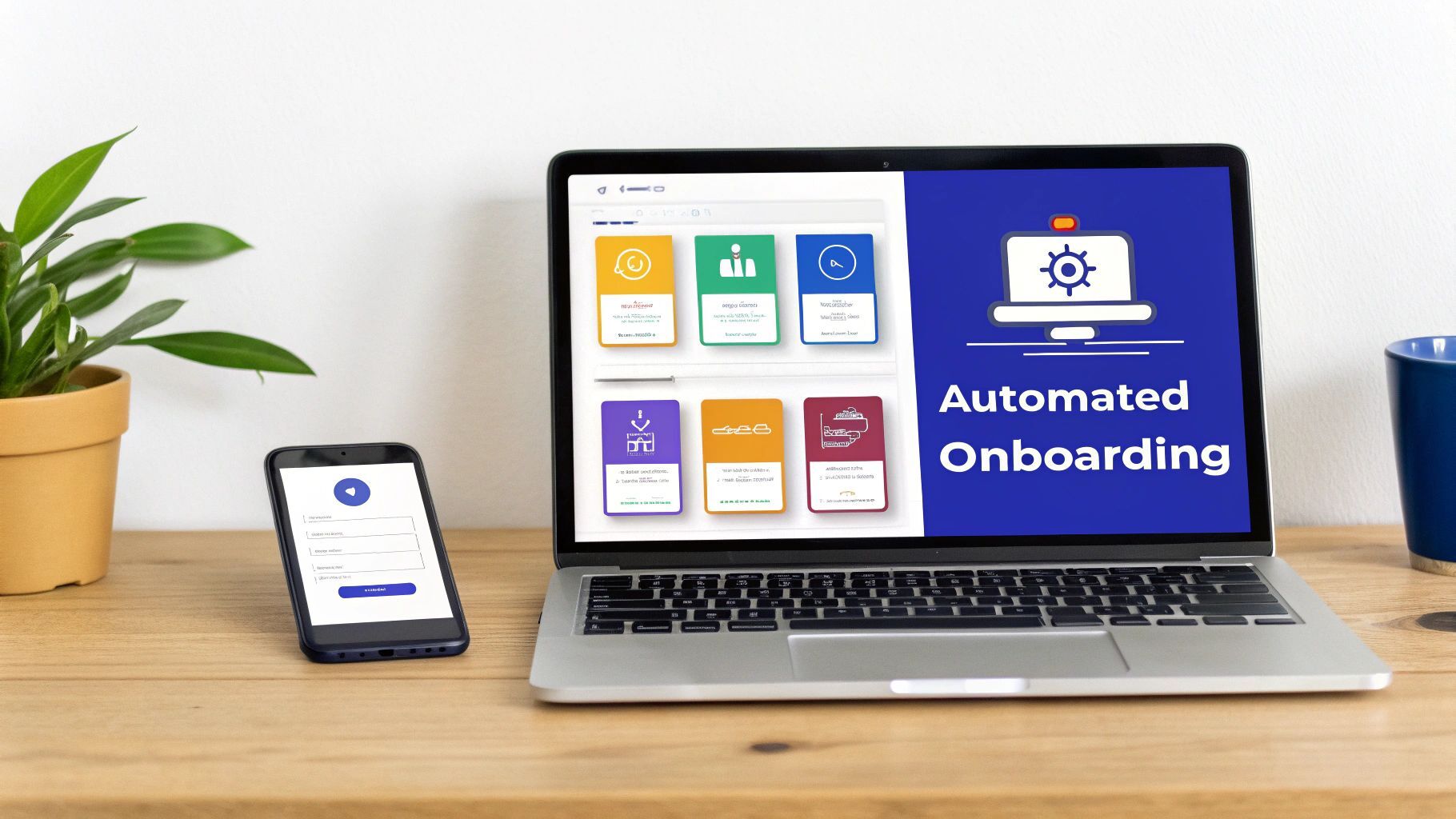
As your team grows, a manual, hands-on onboarding process quickly hits a wall. What worked perfectly when you were hiring one person a quarter becomes a chaotic, inconsistent mess when you’re welcoming multiple people every single month.
Suddenly, your managers are drowning in repetitive admin tasks, pulling them away from the high-value work that actually matters: mentoring their new hire and integrating them into the team culture.
This is where technology and automation completely change the game. By bringing in the right tools, you can build a scalable, high-quality new employee onboarding experience that’s consistent for every person, every time. This isn’t about replacing the human touch; it's about automating the grunt work so your team has more time for it.
When managers are freed from explaining the same core processes over and over, they can finally focus on strategic guidance, giving meaningful feedback, and helping new hires build real connections.
From Dense Documents to Instant Guides
One of the biggest time-sucks in onboarding is turning all your existing knowledge into training materials someone can actually digest. You probably have process documents floating around, but let's be honest—they're often dense, text-heavy walls of text that are nearly impossible for a newcomer to absorb.
This is a golden opportunity to let AI do the heavy lifting.
Modern tools can take those clunky documents and instantly transform them into clear, step-by-step guides. Imagine uploading a long-winded PDF on your expense reporting process and, seconds later, getting back a clean, interactive SOP with clear action items.
This capability is a massive time-saver, ensuring your knowledge base stays current and accessible without someone spending hours on manual formatting.
This doesn't just save time; it dramatically improves the quality and consistency of your training materials. For a deeper dive into how this tech is changing the workplace, check out our guide on HR automation tools and best practices.
By automating the creation of training content, you build a system that scales effortlessly. As processes evolve, updating a central SOP is far more efficient than re-recording videos or rewriting multiple documents scattered across different drives.
Building Automated Training Workflows
Beyond just creating the content, automation lets you build structured learning paths that guide new hires through their make-or-break first few weeks. Instead of a manager manually assigning tasks and chasing progress, you can design automated workflows that do it for you.
For instance, a new marketing hire could be automatically enrolled in a "First Week Marketing Path" that drips out key training:
- Day 1: An interactive guide to the marketing tech stack.
- Day 2: A video tutorial on the brand's voice and tone guidelines.
- Day 3: A short quiz on the lead qualification process.
- Day 4: An SOP for requesting creative assets.
- Day 5: A task to shadow a colleague on a campaign review call.
These workflows guarantee every new hire gets the same foundational training, no matter who their manager is or how slammed the team gets. It levels the playing field and makes sure critical information never falls through the cracks.
Centralizing Knowledge for Consistent Growth
Ultimately, the biggest win from automating your onboarding is creating a centralized knowledge hub. When all your SOPs, training guides, and company policies live in a single source of truth, you eliminate the chaos of outdated documents and conflicting advice.
This consistency is the bedrock of a scalable onboarding machine.
A central platform also empowers employees to find answers on their own, fostering independence from day one. When a question pops up, their first instinct becomes checking the knowledge base, not tapping a colleague on the shoulder. This builds a culture of self-sufficiency and continuous learning—which is exactly what you need for long-term growth.
Common Onboarding Questions Answered
Even with the best framework, questions always pop up when you're trying to build a new employee onboarding program. Let's dig into some of the most common ones I hear from managers and HR leaders who are trying to create an experience that actually sticks.
How Do You Measure Onboarding Success?
Success in onboarding isn't just a gut feeling. It's a mix of hard numbers and real human feedback. You absolutely need both to get a complete picture of what's working and what's falling flat. The end game is simple: get new hires to become confident, productive team members faster, and have them stick around longer.
Start by tracking a few key performance indicators (KPIs). These metrics give you the objective data you need to see the program's real impact.
- New Hire Retention Rate: This is the big one. Are people staying? Track this at the 90-day, six-month, and one-year marks. A high retention rate is one of the strongest signals that you're doing something right.
- Time-to-Productivity: How long does it actually take for a new person to be fully up and running? A shorter ramp-up time means your training and integration efforts are paying off.
- Training Completion Rates: This seems simple, but it's telling. Are new hires actually finishing their assigned learning paths? Low completion can point to boring content, tech issues, or a lack of time.
Numbers are great, but they don't tell the whole story. You need qualitative feedback, too. Regular check-ins and anonymous surveys are goldmines for understanding the new hire experience. Ask direct questions about their confidence, if they feel like they belong, and how clear their role is.
A successful program is one where employees don't just stay, but they also feel supported, prepared, and clear on their purpose from day one. The data should always back up the positive sentiment.
What Are the Biggest Onboarding Mistakes?
So many companies make the same mistakes that can completely derail a new hire's promising start. Honestly, avoiding these common pitfalls is half the battle.
One of the most frequent errors is day-one information overload. Drowning someone in presentations and dense documents just creates anxiety, not clarity. Their first day should be about connection and feeling welcomed, not a pop quiz on the company handbook.
Another huge mistake is a total lack of structure. A "figure it out as you go" approach is a recipe for confusion and disengagement. Without a clear plan, new employees are left guessing what to do and who to talk to, which gets frustrating—fast.
Finally, forgetting the human element is a critical error. Onboarding is a team sport. When you fail to assign an onboarding buddy or mentor, you leave a new employee feeling isolated and afraid to ask all those "silly" questions that are actually essential for learning the ropes.
How Can You Make Remote Onboarding Effective?
Making remote onboarding work means you have to be way more deliberate and structured than you would be in an office. You can't just rely on those spontaneous hallway conversations to build connections; you have to create those moments intentionally.
First, your pre-boarding phase is non-negotiable for remote hires. Make sure all their equipment—laptop, monitors, headset, whatever they need—is shipped and arrives before day one. Nothing sours a first day like a morning spent troubleshooting tech issues.
Use a centralized digital platform as the single source of truth for all training materials, SOPs, and company info. This gives remote folks the exact same access to knowledge as anyone in the office, empowering them to find answers on their own time.
And you have to over-communicate. Schedule frequent video check-ins to build rapport and answer questions before they become roadblocks.
- Daily Manager Syncs: Just a quick, 15-minute chat for the first week to knock out immediate questions.
- Formal Weekly One-on-Ones: These are for the deeper conversations about goals, progress, and feedback.
- Virtual Team Coffees: Schedule some informal, non-work-related chats to help build those personal connections that are so easy to miss when you're remote.
One of the most vital areas for new employee education is cybersecurity, making effective cybersecurity training for employees a key component to address early on among common onboarding questions. Ultimately, the key to remote success is using technology to create clarity and foster genuine connection from a distance.