
An effective staff onboarding process isn't just about getting through the first week—it's a strategic journey that folds new hires into your company culture and primes them for long-term success. It’s the bridge that turns a candidate's initial excitement into sustained productivity and loyalty. Honestly, getting this right is probably the single most important thing you can do to keep top talent from walking out the door.
Why Your Onboarding Process Is Failing New Hires
Let's be real: for a lot of companies, the "onboarding process" is broken. It usually ends up being a frantic blur of paperwork, generic slide decks, and an information dump so massive it leaves people feeling more confused than when they started. This kind of chaos makes new hires feel isolated and, frankly, makes them question if they made the right choice.
The fallout from a bad onboarding experience goes way beyond a rough first impression. When you leave new team members to figure things out on their own, the hidden costs start piling up fast.
The True Cost of a Disorganized Welcome
The most obvious hit is early turnover. The data is pretty clear: nearly 30% of new employees quit within the first 90 days, and a huge chunk of them point to a disorganized, unsupportive onboarding experience as the main reason. That's a massive, silent drain on your resources.
And when a new hire leaves, you're losing a lot more than just the money you spent recruiting them. You're also losing:
- Wasted Productivity: All the time and energy your managers and their new teammates invested in initial training? Gone.
- Team Burnout: The existing team has to pick up the slack, which means heavier workloads and sinking morale.
- Knowledge Drain: Any company-specific insights or skills that person learned walks right out the door with them.
This constant cycle of hiring, failing to integrate, and rehiring creates a state of perpetual disruption. It stops teams from ever really hitting their stride. If this sounds familiar, it’s worth exploring strategies for troubleshooting employee onboarding and solving key pain points.
A flawed onboarding process sends a clear message to new hires: "We're not prepared for you." This early signal of disorganization erodes trust and makes it difficult for even the most enthusiastic employee to feel confident in their new role.
The high cost of getting it wrong is staggering, but the return on getting it right is equally impressive. It’s not just about avoiding negatives; it’s about creating tangible business value.
The High Cost of a Poor Onboarding Process vs The ROI of a Great One
| Impact Area | Poor Onboarding Consequence | Structured Onboarding Benefit |
|---|---|---|
| Turnover | High early attrition (~30% in 90 days), constant recruitment costs. | 82% higher retention, reduced hiring spend, and stable teams. |
| Productivity | Slower time-to-competence, extended learning curves, and reliance on others. | 70% greater productivity in the first year as new hires ramp up faster. |
| Engagement | Feelings of isolation and disengagement, leading to lower morale. | 18x greater commitment to the company and a stronger sense of belonging. |
| Knowledge Transfer | Inconsistent training, knowledge silos, and critical information gets lost. | Consistent, standardized knowledge sharing across all roles and departments. |
| Brand Reputation | Negative reviews on sites like Glassdoor, making it harder to attract top talent. | Positive employer brand and a reputation for investing in employee success. |
A well-structured onboarding program is a direct investment in your company's stability and growth.
Shifting From a Checklist to a Strategy
The fix is to stop thinking of onboarding as an HR checklist and start treating it like a critical business function that fuels profitability. A strategic approach understands that the goal isn't just to get I-9s signed; it's to build competence, confidence, and connection from day one.
This means delivering a consistent, high-quality experience for every single new hire, no matter their department or manager. This is where a centralized knowledge platform becomes non-negotiable. It acts as the single source of truth for all your training materials, standard operating procedures (SOPs), and company info.
When every new team member gets the same foundational training, you wipe out the inconsistencies that breed confusion. This standardized approach doesn't just get them up to speed faster—it proves that you're genuinely invested in their success. If your internal wikis and shared drives aren't cutting it, it might be time to look into dedicated Hubdrive HR solutions that can provide that solid foundation.
By investing in a well-designed staff onboarding process, you're not just plugging a leaky bucket of employee retention. You're building a more resilient, knowledgeable, and powerful organization from the inside out.
Building Momentum Before Day One
The typical onboarding process kicks off with a nervous new hire walking through the door. But what if their journey started the moment they said "yes"? That gap between a candidate accepting your offer and their actual start date is a golden opportunity to build real excitement and quiet those first-day jitters.
This crucial phase, known as pre-boarding, sets the entire tone for their experience with you. It's your first real chance to prove you’re organized, thoughtful, and genuinely invested in their success long before they clock in. A solid pre-boarding plan turns a transactional hire into a human-centric welcome.
Crafting the Digital Welcome Kit
Let’s move beyond the generic "Welcome aboard!" email. A modern, effective pre-boarding strategy is built around a well-curated digital welcome kit. This isn't just a dump of PDFs; it's a dedicated, easy-to-access space where your new team member can start getting acquainted on their own terms. Using a platform like Whale lets you create a professional portal that feels intentional, not just an afterthought.
Your digital welcome kit should be a mix of the practical and the personal:
- A Personal Welcome: A short, informal video message from their direct manager or the team makes a massive impact. It’s far more connecting than a block of text.
- The First Week’s Itinerary: Give them a clear, day-by-day schedule. Knowing what to expect—from team lunches to initial training sessions—removes a ton of anxiety.
- Core Company Info: Let them peek behind the curtain. Share your mission, vision, and values. Link them to key SOPs or playbooks that explain "how we get things done around here."
- Digital Paperwork: Get the administrative headaches out of the way early. Send over tax forms, direct deposit info, and other HR documents digitally so they can tackle them without the pressure of a day-one deadline.
This simple shift means their first day is spent learning and connecting, not getting buried in paperwork.
Fostering Connection Before They Arrive
Logistics are one thing, but connection is what makes someone feel like they belong. Pre-boarding is the perfect time to start weaving those threads.
A great way to do this is with a lightweight "Meet the Team" section in their pre-boarding portal. Think photos, short bios, and maybe a fun fact about their immediate colleagues. You could even include an org chart to help them start connecting the dots between roles and departments.
Another powerful move is to assign an "onboarding buddy" and set up a quick virtual intro before they start. This gives the new hire a go-to person for all those small, informal questions they might feel awkward asking their manager.
A well-executed pre-boarding plan shows a new hire they are joining a thoughtful, organized, and people-first organization. It replaces anxiety with anticipation and ensures they walk in on day one feeling prepared, valued, and ready to make an impact.
Setting the Stage for Success
Ultimately, pre-boarding is about making the transition into a new role as seamless as possible. By front-loading key information and fostering early connections, you're not just being friendly—you're strategically cutting down their ramp-up time.
Think about it: a new hire who has already seen the company's core communication tools, knows the plan for their first week, and recognizes a few friendly faces is miles ahead of someone walking in cold. They can hit the ground running, absorb information faster, and feel more confident from the get-go. That early momentum is priceless.
Designing a High-Impact First Week
The first week on the job is a critical moment. It's where the abstract excitement of a new role crashes into the day-to-day reality of your company. This is the period that truly sets the tone for a new hire's entire journey with you, and frankly, getting it right is non-negotiable for a successful staff onboarding process.
The goal isn't to blast them with information from a firehose. It's about empowering them through a structured, engaging, and genuinely human experience. A high-impact first week carefully balances the must-do administrative tasks with meaningful team introductions, foundational training, and a real taste of your company culture. Think of it as a scaffolded learning approach—delivering information in digestible chunks to avoid that all-too-common feeling of being lost in a sea of new names, tools, and acronyms.
Structuring the Initial Five Days
A well-planned schedule is the backbone of any great first week. Ditch the loose agenda and create a detailed itinerary that shows the new hire exactly what they'll be doing each day. This simple act of organization shows you respect their time and immediately builds their confidence in the company.
To keep energy and engagement high, make sure you intentionally mix different types of activities throughout the day.
- Focused Learning Blocks: Set aside specific times for reviewing SOPs, going through software tutorials, or doing product deep dives. Keep these sessions tight—no more than 60-90 minutes—to maximize what they actually remember.
- Social and Cultural Integration: Make time for the human stuff. Schedule coffee chats, a team lunch, or informal meet-and-greets. These moments are just as crucial as formal training for making someone feel like they truly belong.
- Practical Application: Let them get their hands dirty with small, low-stakes tasks. This could be anything from setting up their development environment to reviewing a past project or shadowing a colleague on a client call.
- Manager and Buddy Check-ins: Carve out dedicated time every single day for one-on-ones with their direct manager and their assigned onboarding buddy. These check-ins are vital for asking questions, getting feedback, and building rapport.
A structured flow, which ideally starts even before their first day, is what sets the stage for a successful week.
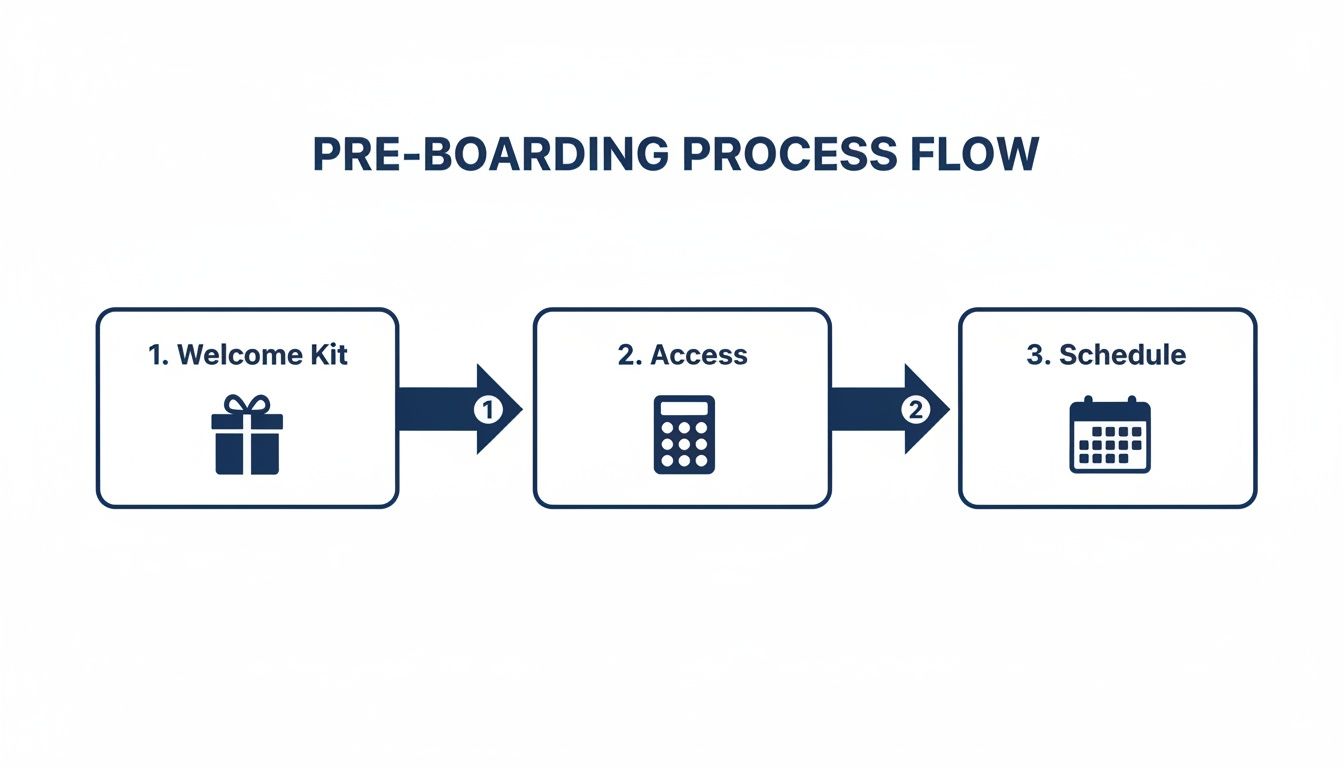
As you can see, a great first week is really the result of a process that begins much earlier, ensuring the new hire walks in the door feeling prepared and excited, not anxious.
Building an Interactive First Week Plan
That first-week itinerary should be more than just a static document. When you build it inside a centralized platform like Whale, you can transform a simple schedule into an interactive, dynamic learning tool. This digital plan becomes the new hire’s single source of truth for their first few days.
Here’s what your interactive plan should include:
- A Daily Checklist: Break down each day into clear, actionable steps. Checking off items like "Complete security training" or "Set up email signature" gives them a tangible sense of progress and accomplishment.
- Direct Links to Resources: For every single training task, embed a direct link to the relevant SOP, training video, or playbook. This completely removes the friction of having to hunt through shared drives for the right document.
- Quick Knowledge Checks: After a key learning module, pop in a short, simple quiz. The point isn't to test them; it's to reinforce the information they just took in.
- Scheduled One-on-Ones: Integrate meeting links and agendas for their check-ins with their manager and buddy right into the plan.
If you need some more ideas on what to include, you can explore some of these must-have employee onboarding templates to get the ball rolling.
The objective of the first week isn't to create an expert overnight. It's to build a foundation of confidence, connection, and clarity that empowers the new hire to start contributing meaningfully in the weeks to come.
Ultimately, a winning first week is a deliberate mix of art and science. It requires thoughtful planning to provide structure and information, but it also needs the flexibility and human touch to make a new person feel genuinely welcome and supported. This investment of time and energy upfront pays off massively in long-term engagement and retention.
Developing Role-Specific Training That Empowers
Let's be honest: a generic onboarding plan is a fast track to disengagement. While the company-wide welcome and values sessions are important, the real magic happens when you get into the weeds of role-specific training. This is the moment a new hire stops feeling like a guest and starts feeling like a competent, confident contributor.
To get there, you need to move beyond the standard HR checklists. It’s about partnering directly with department heads—the true subject matter experts. They hold the keys to the kingdom: the core functions, critical tasks, and subtle workflows that actually define success in a role. Your job is to help them pull that deep, often unspoken, knowledge out and shape it into clear, step-by-step Standard Operating Procedures (SOPs).
From Department Knowledge to Actionable SOPs
Getting this critical information out of a manager's head and onto the page is often the biggest hurdle. It can feel like trying to boil the ocean, but it doesn’t have to. The trick is to break it down.
Here’s a simple process that works every time:
- Identify Core Functions: Sit down with the department manager and nail down the 5-7 primary responsibilities of the role. For a sales rep, this might be things like "Prospecting," "Conducting Demos," and "Updating the CRM."
- Drill Down into Tasks: Take each of those functions and break them down into the specific, individual tasks they involve. Under "Updating the CRM," you'd list out actions like "Logging a new lead," "Updating an opportunity stage," and "Generating a weekly report."
- Document Each Task: Now you’re ready to create the actual SOPs. Each one should be a simple, bite-sized guide for a single task. Don't be afraid to use screenshots or even short video clips where it helps clarify a step.
This methodical approach turns abstract job duties into a concrete library of actionable guides, preventing overwhelm and ensuring nothing important slips through the cracks.
Accelerating SOP Creation with AI
This is where modern tools can completely change the game. An AI-powered platform like Whale can take unstructured notes—think a long Word doc or a rambling email from a manager—and instantly organize them into a clean, structured SOP. It can suggest logical steps, add consistent formatting, and even generate quick quizzes to make sure the information sticks.
The numbers don't lie. The global employee onboarding software market, valued at $2.5 billion in 2025, is projected to hit a staggering $10 billion by 2034. This isn't just a trend; it's a fundamental shift away from outdated manual processes. With traditional onboarding often lasting just one week, a shocking 33% of new hires leave within six months, feeling lost and unprepared. In sharp contrast, companies using structured digital tools see 82% higher retention and productivity gains of over 70%.
This is what modern onboarding looks like: technology creating personalized, accessible learning paths that new hires can tackle at their own pace.
The real win here is centralization. It moves mission-critical knowledge off of individual hard drives and into a single, searchable source of truth that helps everyone, not just the new folks.
Building a Complete Learning Path
Once you've documented your role-specific SOPs, you can start assembling them into a comprehensive learning path. Let's stick with our example of onboarding a new sales development representative (SDR). Their first couple of weeks might look something like this:
Week 1: Foundational Skills
- Software Setup: Step-by-step guides for getting their CRM, sales engagement tools, and communication platforms up and running.
- Product Knowledge: Easy access to core product one-pagers, demo recordings, and key feature SOPs.
- Internal Comms: SOPs explaining how to use specific Slack channels, tag opportunities correctly, and escalate issues.
Week 2: Core Activities
- Prospecting Workflows: A sequence of SOPs covering how to research leads, use LinkedIn Sales Navigator effectively, and build targeted lists.
- Call and Email Scripts: Approved templates for initial outreach, complete with guidance on how to personalize them.
- Shadowing Sessions: A checklist for observing senior reps on live calls, highlighting what to listen for and what questions to ask afterward.
By creating a structured learning path, you give new hires a clear roadmap from day one. They know exactly what's expected of them and in what order, which replaces anxiety with a powerful sense of direction and purpose.
This level of structure also empowers people on a deeper level. A huge part of this is fostering a supportive environment, like understanding the importance of being a mentor to newcomers to the healthcare profession or any other field. Good documentation frees up managers to be those mentors, not just trainers repeating the same basic instructions.
When a new hire has a question, their first instinct can be to check the SOP library. This builds self-sufficiency and confidence, allowing them to solve problems on their own and speed up their own learning curve. It’s how you ensure every new team member feels competent and capable, not lost and dependent.
Measuring Onboarding Success and Making It Better
A great staff onboarding process isn’t something you build once and then file away. The best programs are living, breathing parts of your company culture. They have to evolve based on what's actually working on the ground.
Without a solid way to measure success, you’re just guessing. And in the world of talent, guessing can be an incredibly costly mistake. To really know if your onboarding is hitting the mark, you need to set some clear Key Performance Indicators (KPIs). These metrics shift the conversation from "I think it went well" to "the data shows we've improved," which is exactly where you want to be.
This data-driven feedback loop is what transforms onboarding from a simple HR checklist into one of your most powerful engines for retaining top talent.
Defining Your Core Onboarding Metrics
Let's be blunt: you can't improve what you don't measure. The first move is to pick a handful of KPIs that genuinely reflect what you're trying to achieve. While you could track dozens of things, a few core metrics will give you the clearest picture of your onboarding program's health.
Here's where I'd recommend you start:
- Time-to-Productivity: How long does it actually take for a new hire to start contributing at a baseline level? This is a direct measure of how effectively your training gets them up to speed.
- New Hire Satisfaction: Are new team members feeling supported, informed, and genuinely excited to be there? Regular, quick pulse surveys are your best friend for gathering this kind of qualitative data.
- 30-60-90 Day Goal Achievement: Are new folks hitting the specific, incremental goals their managers set? This is a fantastic way to track progress and catch any potential struggles before they become major problems.
- First-Year Turnover Rate: This one is the ultimate gut-check. If you have a high number of people leaving within their first year, it's a massive red flag that something in your onboarding or early employee experience is broken.
Tracking these gives you a balanced scorecard, combining hard performance numbers with the crucial, human side of the experience.
Key Metrics for Evaluating Onboarding Success
To get a clearer view, here’s a breakdown of some essential KPIs, what they tell you, and how to start tracking them.
| Metric | What It Measures | How to Track It |
|---|---|---|
| Time-to-Productivity | The efficiency of your role-specific training and ramp-up period. | Set baseline performance benchmarks with managers; track when new hires consistently meet them. |
| New Hire Satisfaction | Overall engagement, cultural fit, and perceived support. | Use anonymous pulse surveys at 1-week, 30-day, and 90-day marks using tools like Typeform or Google Forms. |
| 30-60-90 Day Goal Achievement | A new hire's progress and alignment with role expectations. | Managers set and track these goals in your HRIS or project management tool during one-on-one check-ins. |
| First-Year Turnover Rate | The long-term effectiveness of onboarding in retaining talent. | Calculate the percentage of new hires who leave within their first 12 months. |
| Training Completion Rates | Engagement with and completion of assigned training modules. | Track completion data within your learning management system (LMS) or SOP platform like Whale. |
Tracking these metrics gives you a powerful, data-backed narrative about what's working and where you need to focus your improvement efforts.
Gathering Honest Feedback Through Surveys and Check-ins
Data is only half the story; you need the context that comes from real human feedback. To get an honest read on new hire satisfaction, you have to ask the right questions at the right moments.
Forget generic, corporate-sounding surveys. Instead, focus on specific, actionable questions at key milestones—think the end of week one, day 30, and day 90.
Your questions should be a mix of quick ratings and open-ended prompts that invite real talk:
- On a scale of 1-10, how prepared did your first week make you feel for your role?
- Did you feel you had a clear understanding of your responsibilities by the end of your first month?
- What's one thing we could have done to make your onboarding experience even better?
- Was the role-specific training you received relevant and easy to follow?
- How helpful has your onboarding buddy been in answering your day-to-day questions?
The goal of feedback isn't just to get a score; it's to uncover friction points. If three new hires in a row mention they were confused about a specific piece of software, you've just found a golden opportunity to improve a training module.
Combine these surveys with structured, one-on-one check-ins. These manager-led conversations are where you can get the "why" behind the survey data. It's a chance to dig deeper, build trust, and show your new hire that their feedback isn't just being collected—it's being heard. For a deeper dive, you can learn more about how to measure your employee onboarding process effectively.
Turning Insights into Actionable Improvements
Collecting data is easy. The real magic happens when you use those insights to create a cycle of continuous improvement. Make it a habit to schedule a quarterly review of your onboarding metrics with key stakeholders, like HR leaders and department heads.
In these meetings, hunt for trends. Are new engineers consistently taking longer to hit their productivity targets? Maybe their role-specific training needs a more hands-on, project-based approach. Are satisfaction scores dipping around the 60-day mark across the board? Perhaps it’s time to introduce a formal mid-onboarding check-in to re-engage them.
This process—measure, analyze, refine, repeat—is what separates a decent onboarding program from a truly great one. It ensures your process adapts to the changing needs of your team and your business, making every new hire’s experience even better than the last. To achieve effective onboarding strategies for talent retention, it’s essential to prioritize open communication and provide consistent feedback. By fostering a welcoming environment and ensuring that new hires feel valued, organizations can significantly enhance employee engagement. Ultimately, this commitment to an exceptional onboarding experience lays the foundation for long-term success.
Frequently Asked Questions About Staff Onboarding
Even with a killer plan, you’re bound to have questions about the finer points of your staff onboarding process. That’s completely normal. Nailing down these details is what refines your strategy and gets everyone, from HR to line managers, on the same page.
Let’s tackle some of the most common questions we hear from operations and HR leaders.
How Long Should a Staff Onboarding Process Last?
The first week is intense, no doubt. But a truly effective onboarding process needs to stretch for at least the first 90 days. Some studies even suggest it can take up to a year for a new hire to feel fully integrated and productive.
The goal here is to move beyond the initial paperwork flurry and focus on genuine role proficiency, cultural fit, and building solid professional relationships. A 30-60-90 day check-in model is the perfect framework for this. It ensures your new hire gets continuous support as they grow from learning the ropes to confidently contributing on their own.
What Is the Biggest Mistake Companies Make?
By far, the most damaging mistake is treating onboarding as a one-day information dump. You know the one—a blur of paperwork, policies, and procedural overviews that leaves a new hire feeling more overwhelmed than welcomed. This approach totally misses the mark on what people actually need: context, connection, and clarity.
Effective onboarding is a structured journey, not a single event. It has to be paced, specific to the role, and centered on building relationships and confidence. Forgetting the human element is a close second for the biggest mistake you can make.
How Can an AI Platform Specifically Improve Onboarding?
This is where things get interesting. An AI-powered SOP platform like Whale completely changes the game by centralizing all your company knowledge and making it searchable in seconds. Instead of a new hire digging through messy shared drives or constantly bugging colleagues, they can pull up a step-by-step guide for pretty much any task.
AI helps create this content way faster, too—turning rough notes into clear SOPs or generating quick quizzes to check for understanding. It ensures every single person gets consistent, up-to-date information, which is a lifesaver for scaling teams. This frees up managers from repetitive training and empowers new hires to find answers themselves, dramatically speeding up their time-to-productivity.
What Is the Role of a Manager in the Onboarding Process?
The direct manager is the single most important person in a new hire’s success. While HR might own the overall process, the manager is on the ground, handling the day-to-day integration and support that really makes a difference.
A great manager’s onboarding playbook includes:
- Setting clear expectations for the first 30, 60, and 90 days.
- Giving regular, constructive feedback during one-on-one check-ins.
- Connecting the new hire's daily tasks to the bigger team and company goals.
- Acting as a coach and advocate, making sure their new team member feels supported, challenged, and truly part of the culture.
Honestly, a manager’s active involvement is often the biggest predictor of whether a new person will stick around and thrive long-term.