


In this article
Last updated: 18 August 2026
Quality management system software helps organizations turn quality control from a set of scattered manual checks into a structured, auditable system. As regulatory demands and customer expectations have grown, more businesses have moved away from spreadsheets and paper checklists toward dedicated QMS platforms that centralize documentation, automate audits, and catch problems before they become recalls.
We compared 7 of the strongest QMS tools for 2026 — Whale, MasterControl, Octave Reliance, Intelex, SAP Quality Management, Qualio and Mitti (formerly SafetyCulture) — on real pricing, features and G2 ratings.
The cost of getting this wrong is real: the American Society for Quality estimates that quality-related costs, when things go wrong, can consume 15 to 20% of annual sales for many manufacturers. It is no surprise the QMS software market itself is growing quickly to meet that need, valued at $11.73 billion in 2026 and projected to reach $20.43 billion by 2031 — an 11.7% CAGR, according to MarketsandMarkets.
Whether you are managing a manufacturing process, ensuring compliance in healthcare, or streamlining operations in service industries, the right QMS tool changes how you handle quality. Here is what to look for, and which tools are worth considering.
Key Takeaways
- Quality is a financial risk, not just a standards exercise. The cost of poor quality — recalls, rework and compliance failures — can run to 15–20% of annual sales for manufacturers without a structured system in place.
- Most enterprise QMS platforms do not publish pricing. MasterControl, Octave Reliance, Intelex, SAP Quality Management and Qualio are all quote-only, aimed at larger regulated organizations with five- or six-figure annual budgets.
- QMS software genuinely can scale down for smaller teams — but only with the right tool. Mitti (formerly SafetyCulture) and Whale both publish real pricing and offer genuine free tiers.
- Watch for rebrands in this category. ETQ Reliance is now Octave Reliance, and SafetyCulture is now Mitti. Same platforms, new names — which is what makes older comparison articles so confusing to read.
What Is a Quality Management System (QMS)?
A Quality Management System (QMS) is a set of processes, procedures, and tools designed to ensure consistent product and service quality. It provides a structured approach to identifying, documenting, and improving an organization’s workflows to meet customer expectations and comply with industry regulations.
Traditionally, organizations relied on manual processes to manage quality, but as businesses and regulatory requirements grew more complex, manual systems became inefficient and prone to errors. That’s where Quality Management Software steps in—offering automation, integration, and real-time insights to help businesses achieve unparalleled quality.
Whether you’re in manufacturing, healthcare, food production, or any other industry, a QMS helps align your organization’s goals with quality-driven processes, reducing risks and driving better outcomes.
Why Do Businesses Need Quality Management System Software?
Implementing QMS software isn’t just about keeping up with the competition; it’s about creating a foundation for operational excellence. Here’s why businesses across industries are embracing this technology:
1. Improved Operational Efficiency
Manual systems are time-consuming and error-prone. QMS software automates routine tasks like document control, compliance tracking, and reporting, freeing up valuable time for your team to focus on higher-level tasks.
2. Compliance and Audit Preparedness
Regulatory standards like ISO 9001, FDA, and GMP demand rigorous documentation and tracking. QMS software ensures all records are accurate, up-to-date, and easily accessible during audits, reducing the risk of penalties.
3. Cost Reduction
Quality-related issues like product defects and recalls can be extremely costly. QMS software helps prevent these issues by enabling real-time monitoring, early error detection, and root-cause analysis.
4. Enhanced Customer Satisfaction
When your products and services consistently meet or exceed customer expectations, you build trust and loyalty. QMS software ensures every aspect of your operations aligns with these goals, leading to happier customers and stronger brand reputation.
5. Data-Driven Decisions
QMS tools provide valuable insights into trends, risks, and areas for improvement through robust analytics and reporting features. This allows businesses to make informed decisions that drive continuous improvement.
6. Risk Mitigation
By identifying potential quality risks early, QMS software helps mitigate them before they escalate. This proactive approach ensures a smoother workflow and minimizes disruptions.
Key Features of QMS Software
When evaluating QMS software, it’s essential to look for features that align with your business requirements. The most effective solutions typically include:
- Document Control: Centralize policies, manuals, and procedures in a secure repository, ensuring everyone accesses the most recent documents.
- Audit Management: Automate audit planning, tracking, and reporting to streamline compliance efforts.
- Corrective and Preventive Actions (CAPA): Manage quality issues by documenting, tracking, and resolving them to prevent recurrence.
- Supplier Quality Management: Evaluate supplier performance to ensure they consistently meet your standards.
- Training Management: Track employee certifications and training to ensure compliance with industry requirements.
- Risk Management: Identify, assess, and mitigate risks affecting product quality or compliance.
- Real-Time Reporting and Analytics: Use data-driven insights to monitor performance and identify opportunities for improvement.
The Best QMS Tools You Need for Quality Control
Let’s take a closer look at some of the top-quality management software solutions available today. Each of these tools brings unique strengths to the table, so it’s important to choose the one that best suits your organization’s needs.
QMS software compared at a glance
| Tool | Best for | Starting price | Free tier | G2 rating |
|---|---|---|---|---|
| Whale | Checklists, templates and employee compliance tracking | Free Forever, 10 members included | Yes | 4.8 out of 5 |
| MasterControl | End-to-end automation for highly regulated industries | Custom, quote-only. Third-party estimates suggest $25,000 to $100,000+ a year | No | 4.3 out of 5 |
| Octave Reliance (formerly ETQ Reliance) | Manufacturing, automotive and food industries | Custom, quote-only | No | 4.3 out of 5 |
| Intelex | Combined quality and safety (EHSQ) management | Custom, quote-only | No | 4.1 out of 5 |
| SAP Quality Management | Enterprises already running SAP ERP | Part of SAP S/4HANA and Cloud ERP licensing, custom | No | No standalone rating — it is a module inside the wider SAP ERP suite, not an independently reviewed product |
| Qualio | Biotech, medical devices and regulated SMBs | Custom, quote-only. Third-party estimates start at about €25,000 a year, plus implementation fees | No | 4.4 out of 5 |
| Mitti (formerly SafetyCulture) | Small and mid-size teams wanting an accessible, scalable QMS | Premium $24 per seat/month billed annually, or $29 billed monthly | Yes, up to 10 users | 4.6 out of 5 |
G2 ratings reflect scores at the time of writing and may change — check each vendor’s G2 page for the current figure. Most enterprise QMS platforms do not publish pricing at all: the rows marked “custom, quote-only” require a sales conversation, and even the third-party estimates above should be confirmed directly with the vendor. The Qualio estimate is quoted in euros because that is the currency its third-party source uses.
1. Whale
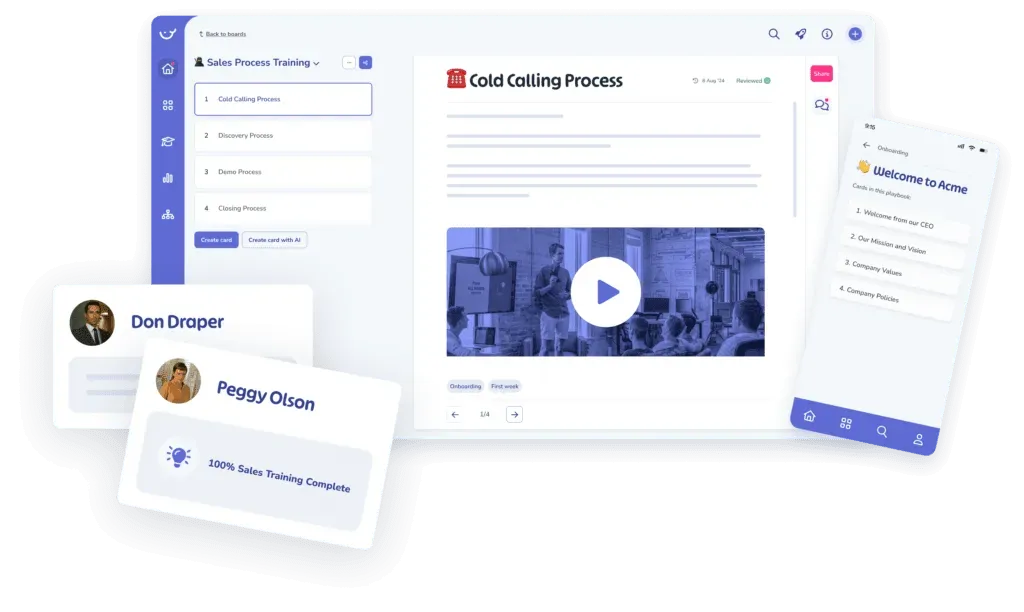
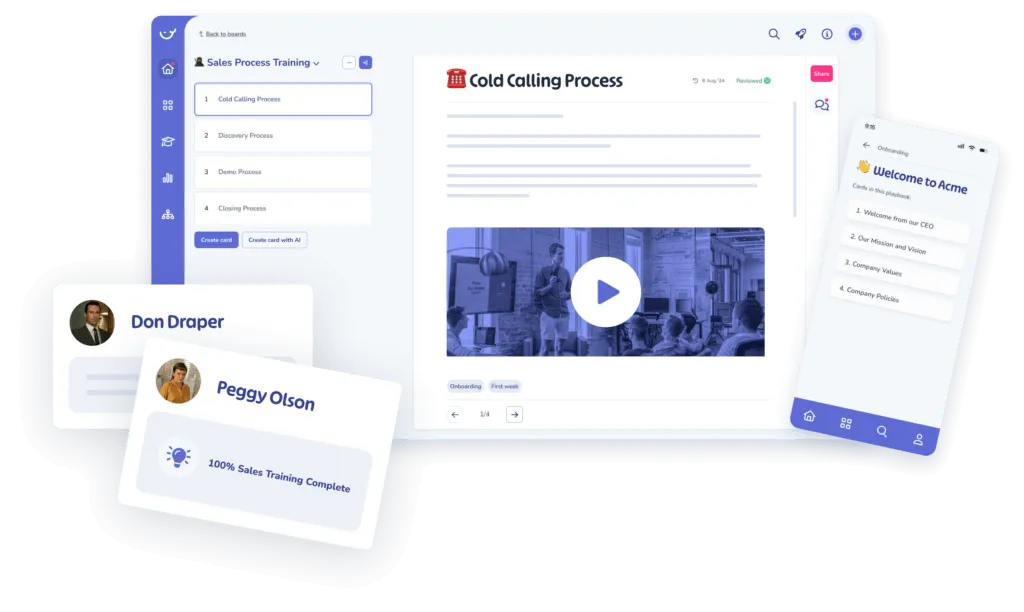
Whale is typically described as an AI-powered documentation and training tool. So how could it be considered a Quality Management System? Well, Whale with it’s checklists and templates is the ultimate quality system, helping businesses of all sizes manage their processes and employee compliance.
- Key Strengths:
- Checklists and templates
- End-to-end quality management with automation.
- Mobile workforces with it’s iOS and Android based applications
- Dashboards for tracking completion rates
Best For: Organizations who are looking to manage employee compliance in an easy all in one solution.
For organizations where the quality challenge is mostly about consistent execution of documented procedures rather than heavy regulatory audit trails, Whale offers a genuinely accessible way to get there.
Pricing: Free Forever ($0, 10 members included). Scale is $249/month billed annually with 3 creators included. Advance is $499/month billed annually with 5 creators included. Everyone else joins as a member, with no per-seat fee. Enterprise pricing is available on request.
G2 rating: 4.8 out of 5.
Pros: Accessible published pricing, mobile-friendly checklists and training, real accountability dashboards, fast to roll out without an implementation project.
Cons: Not built for heavy regulatory workflows like formal CAPA or audit management the way dedicated QMS platforms are.
2. MasterControl
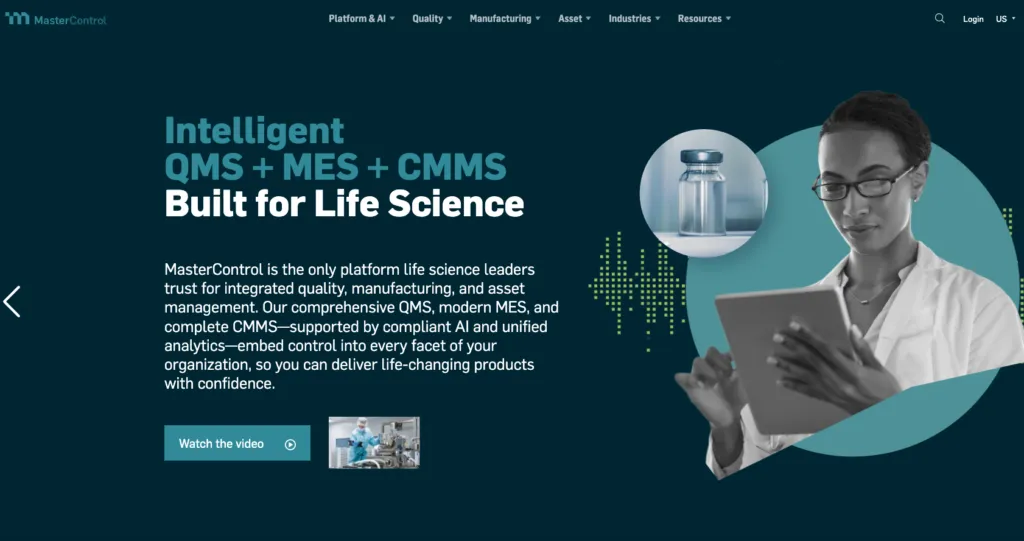
MasterControl is one of the most established names in regulated-industry QMS, with end-to-end automation built specifically around ISO and FDA compliance and real-time dashboards for life sciences, pharmaceutical and healthcare organizations. Its depth in regulated workflows is a genuine strength for organizations that need to prove compliance, not just practise it.
- Key Strengths:
- End-to-end quality management with automation.
- Seamless compliance with standards like ISO 13485 and FDA regulations.
- Intuitive dashboards for tracking quality metrics in real time.
Best For: Organizations in highly regulated industries that need rigorous compliance features.
Pricing: Custom, quote-only — MasterControl publishes no figures anywhere. Third-party estimates suggest $25,000 to $100,000+ a year depending on scope, often with additional validation and onboarding fees on top. Budgeting requires a real sales conversation.
G2 rating: 4.3 out of 5.
Pros: Deep regulatory compliance features, strong real-time dashboards, well established in life sciences and pharma.
Cons: No transparent pricing, likely additional fees for validation and onboarding, overkill for less regulated organizations.
3. Octave Reliance (formerly ETQ Reliance)
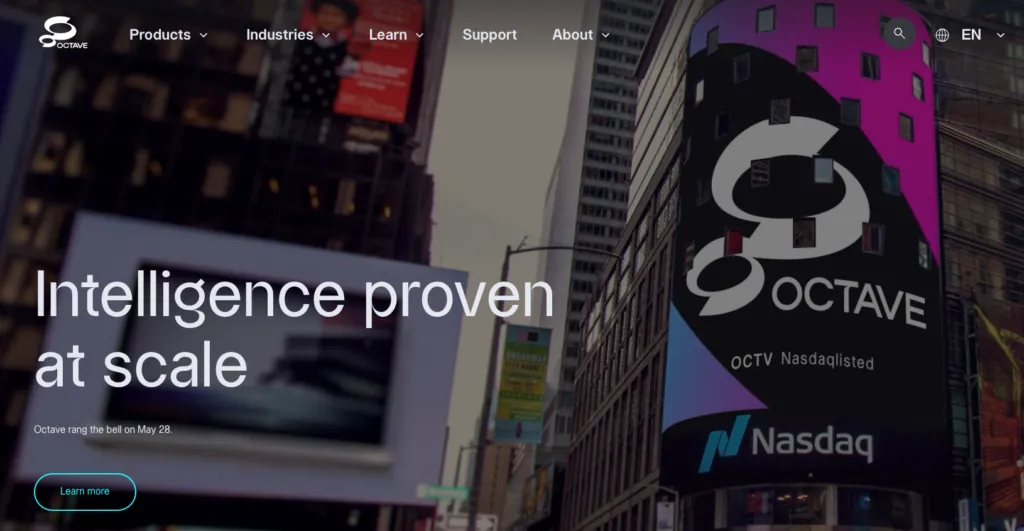
Octave Reliance, known for years as ETQ Reliance, is a customizable, scalable QMS aimed at manufacturing, automotive and food industries, with strong risk analytics and a friendlier interface than some of its enterprise peers. The naming history is worth knowing before you research it: Hexagon acquired ETQ in 2022, then in May 2026 spun the business out as Octave Intelligence, an independent publicly traded company — which is where the “Octave” name comes from. It is still the same actively developed platform.
- Key Strengths:
- User-friendly interface with customizable modules.
- Comprehensive risk management and analytics tools.
- Scalable solutions for businesses of all sizes.
Best For: Businesses that require a highly customizable and scalable QMS solution.
Pricing: Custom, quote-only. Like most enterprise QMS tools here, Octave Reliance publishes no pricing, so getting a real number means booking a sales call.
G2 rating: 4.3 out of 5, still listed on G2 as “Octave Reliance (formerly ETQ Reliance)”.
Pros: Strong risk analytics, customizable to industry-specific needs, scalable across manufacturing, automotive and food sectors.
Cons: No transparent pricing, and the rebrand makes it harder to research the product under its older name.
4. Intelex
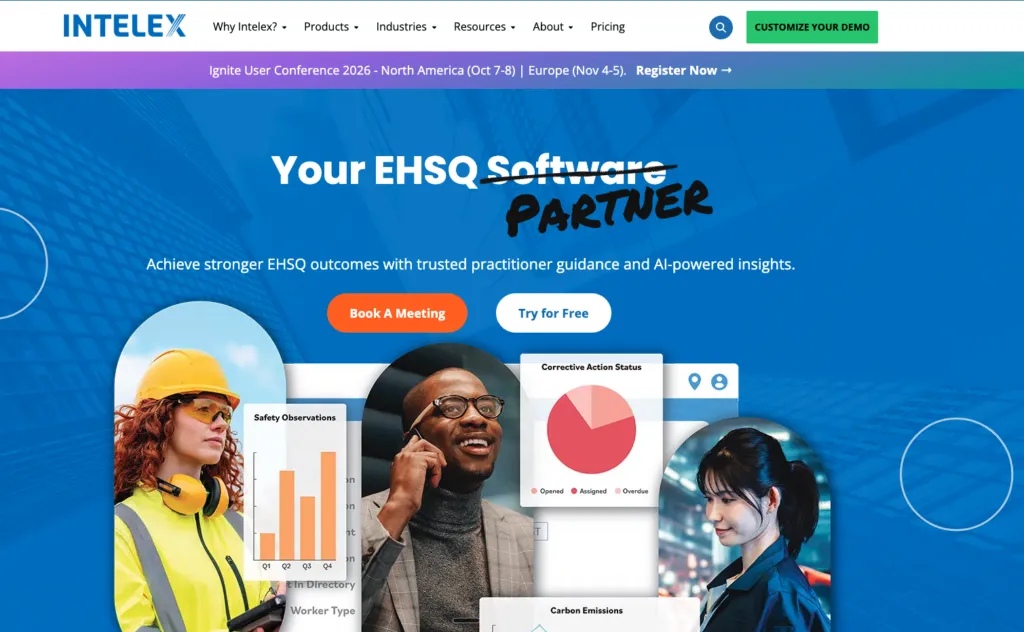
Intelex combines quality management with health, safety and environmental (HSE) management in one cloud-based platform — useful if you would rather not run separate systems for quality and safety compliance. Its library of pre-built templates shortens implementation compared with building workflows from scratch.
- Key Strengths:
- Real-time monitoring of quality and HSE data.
- Pre-built templates for faster implementation.
- Advanced reporting and analytics tools.
Best For: Organizations looking for an all-in-one solution that combines quality and safety management.
Pricing: Custom, quote-only. Intelex, listed on G2 as “Intelex EHSQ”, publishes no figures.
G2 rating: 4.1 out of 5, on a notably smaller review base than some peers here.
Pros: Combined quality and safety management in one platform, cloud-based, pre-built templates speed up setup.
Cons: No transparent pricing, smaller G2 review base, interface complexity noted by some reviewers.
5. SAP Quality Management
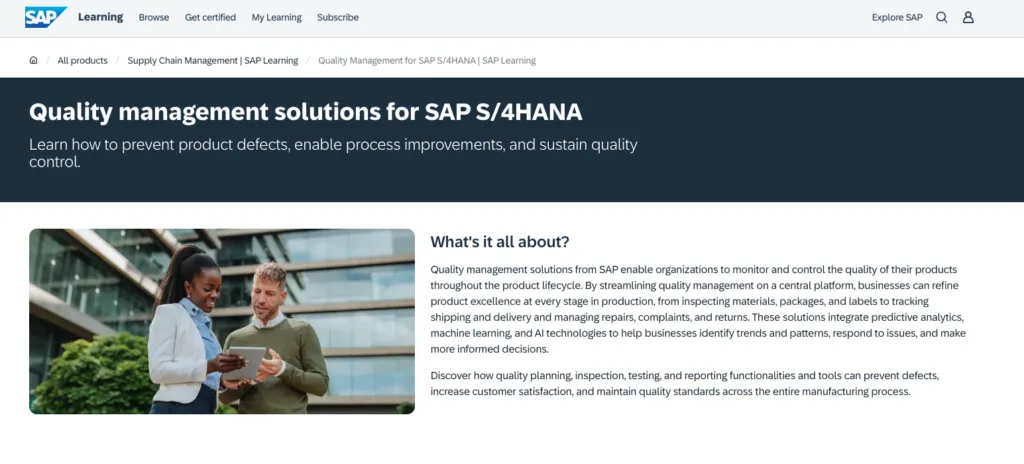
SAP Quality Management is the quality module inside SAP’s broader ERP suite (S/4HANA, marketed in some product lines as SAP Cloud ERP), which makes it the natural choice for large enterprises already running their operations on SAP. The deep ERP integration means quality data connects directly to the procurement, manufacturing and supply chain data already living in the same system.
- Key Strengths:
- Tight integration with ERP systems for enterprise-wide visibility.
- Advanced analytics and reporting capabilities.
- Reliable support for complex manufacturing environments.
Best For: Large organizations already using SAP ERP and seeking comprehensive QMS integration.
Pricing: Part of SAP S/4HANA and Cloud ERP licensing — custom and enterprise-scale. Because it is a module rather than a standalone product, there is no separate SAP QM price list.
G2 rating: No standalone rating. SAP QM has no independent G2 page; both its pricing and its reviews are wrapped into the wider SAP ERP presence, which makes it harder to evaluate in isolation.
Pros: Deep integration with existing SAP ERP data, strong fit for large enterprises already on SAP, advanced analytics.
Cons: Only makes sense if you are already using or planning to use SAP ERP, with no standalone pricing or independent review presence.
6. Qualio
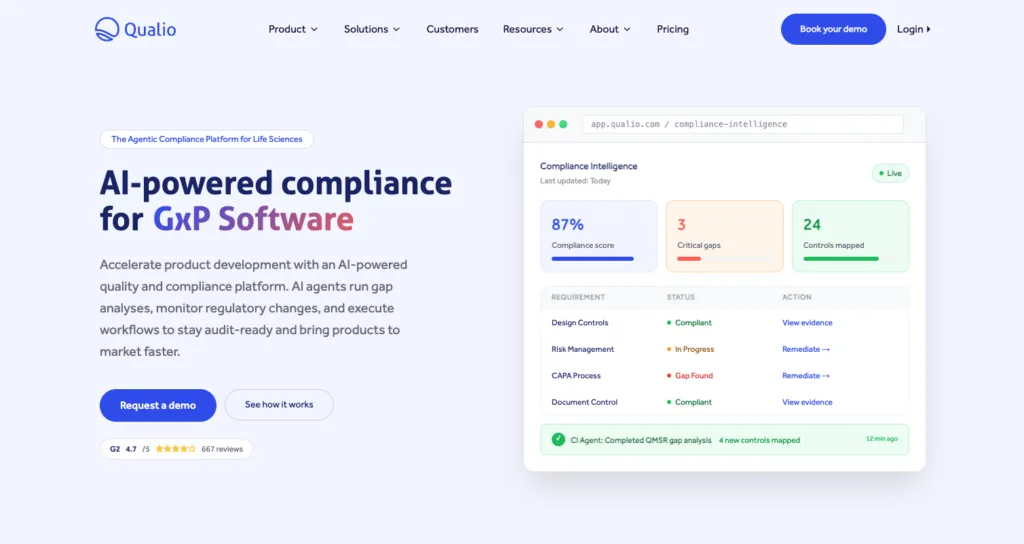
Qualio targets biotech, medical device and other regulated-sector companies with an interface that is noticeably easier to onboard onto than some of the heavier legacy platforms here. It is positioned as more accessible for smaller regulated companies — though “accessible” is relative in this category.
- Key Strengths:
- Intuitive interface that’s easy to use and implement.
- Streamlined workflows for managing compliance documentation.
- Built-in tools for employee training and certification tracking.
Best For: Startups and small-to-medium-sized businesses in regulated sectors that need a cost-effective yet robust QMS.
Pricing: Custom, quote-only. Qualio publishes no pricing; third-party estimates suggest a starting point of at least €25,000 a year for smaller startups, plus separate implementation fees — worth factoring in before assuming this is a truly SMB-friendly option.
G2 rating: 4.4 out of 5.
Pros: More intuitive and faster to onboard than many enterprise QMS platforms, strong reputation in biotech and medical devices, cost-effective relative to the largest platforms here.
Cons: Still quote-only and still a meaningful annual commitment — not genuinely budget-friendly for very small teams, despite sometimes being marketed that way.
7. Mitti (formerly SafetyCulture)
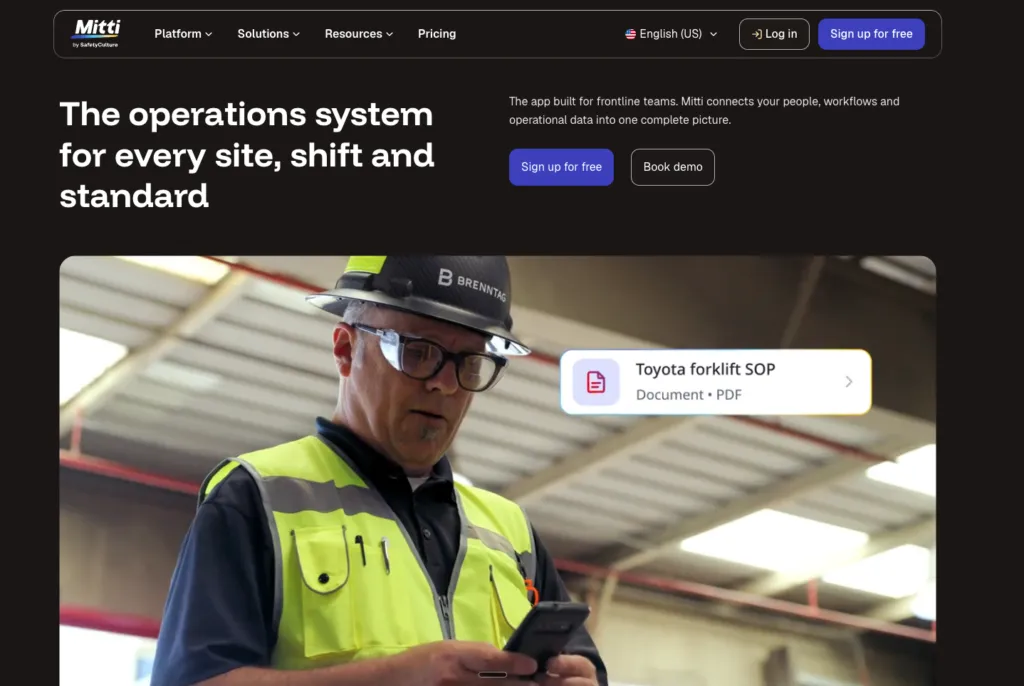
Mitti, the platform SafetyCulture renamed and now markets as “Mitti by SafetyCulture”, rounds out this list as the tool that actually backs up the claim that QMS software can scale down for smaller businesses. Its free tier supports up to 10 users, and its Premium plan has real, published per-seat pricing rather than a quote-only model — a genuine rarity in this category. It combines inspection checklists, corrective actions and reporting in a platform that is approachable without a big implementation project.
- Key Strengths:
- Published per-seat pricing and a genuine free tier.
- Mobile-first inspection checklists and corrective actions.
- Reporting and analytics without an enterprise rollout.
Best For: Small and mid-size teams that want an accessible, scalable QMS without a quote-only sales process.
Pricing: Free plan for up to 10 users. Premium is $24 per seat/month billed annually (a 17% saving) or $29 per seat/month billed monthly. Enterprise pricing is custom.
G2 rating: 4.6 out of 5.
Pros: Real, transparent pricing, a genuine free tier, approachable for smaller teams without a big implementation lift.
Cons: Less deep on formal regulatory workflows — CAPA, validation, audit trails — than the enterprise-focused platforms in this comparison, so heavily regulated organizations may still need to graduate to something like MasterControl or Qualio as they scale.
Bottom Line? Quality Matters
Quality isn’t just about meeting standards—it’s about exceeding expectations and fostering trust with your customers. A robust Quality Management Software solution is an investment that pays off by enhancing operational efficiency, ensuring compliance, reducing costs, and improving customer satisfaction.
The honest summary of this category: if you are in a heavily regulated industry with the budget for an enterprise platform, MasterControl, Octave Reliance, Intelex, SAP QM and Qualio are all credible — but expect a sales conversation rather than a price list. If your quality problem is really about consistent execution of documented procedures, Whale and Mitti both publish their pricing and start free, which makes them far easier to trial before committing.
Whether you’re a growing startup or an established enterprise, there’s a QMS tool out there tailored to your needs. Take the time to evaluate your options, and remember: investing in quality isn’t just good business—it’s what sets you apart in today’s competitive market.
Key Terms & Further Reading on Quality Control
Key Definitions
Definition of a Training Manager
Additional resources
Employee Goal Setting Template
Related blog posts
How to Implement Quality Control?
Lisa Steingold is the Head of Content for Whale. With a history in tech, she's authored 4 books and is obsessed with helping teams unlock the next level of growth and productivity. (And riding her bike)