
Security at Whale
At Whale, we prioritize not only technological advancement but also the ethical and responsible use of AI and data. We strive to ensure that our infrastructure fosters trust, transparency, and accountability, contributing to a more ethical, secure, and inclusive digital ecosystem globally.
Whale is SOC 2 compliant, GDPR compliant and HIPAA ready. Every control we hold is monitored continuously.
- 4.8/5 on G2
- SOC 2 certified








Trusted by the world's most trusted companies

Security
Security your IT team
can sign off on
What IT asks about before a rollout, answered.
SOC 2 certified
How your procedures and records are stored and protected is independently audited.
Granular permissions and enforced SSO
Available from the Advance plan, so access control matches how your organisation is already set up.
GDPR aligned
EU and UK data rights documented in the Whale Trust Center.
Your data, your region
Hosted in the US or the EU, whichever you choose.
Enterprise agreements
A BAA is signed on request on the Enterprise plan.
Product security
These are the five product security controls Whale holds, in full.
Data encryption utilized
The company’s datastores housing sensitive customer data are encrypted at rest.
Control self-assessments conducted
The company performs control self-assessments at least annually to gain assurance that controls are in place and operating effectively. Corrective actions are taken based on relevant findings. If the company has committed to an SLA for a finding, the corrective action is completed within that SLA.
Penetration testing performed
The company’s penetration testing is performed at least annually. A remediation plan is developed and changes are implemented to remediate vulnerabilities in accordance with SLAs.
Data transmission encrypted
The company uses secure data transmission protocols to encrypt confidential and sensitive data when transmitted over public networks.
Vulnerability and system monitoring procedures established
The company’s formal policies outline the requirements for the following functions related to IT / Engineering: vulnerability management and system monitoring.
Continuously monitored controls
Whale monitors 51 controls across five areas, each one tracked continuously through Vanta.
Infrastructure security
19 controls monitored continuously. Examples of the 19 controls in this area:
- Unique production database authentication enforced
- Encryption key access restricted
- Unique account authentication enforced
- Production network access restricted
- Firewall access restricted
- Access revoked upon termination
Organizational security
7 controls monitored continuously. All 7 controls in this area:
- Production inventory maintained
- Employee background checks performed
- Confidentiality Agreement acknowledged by contractors
- Confidentiality Agreement acknowledged by employees
- Performance evaluations conducted
- Password policy enforced
- MDM system utilized
Product security
5 controls monitored continuously. All 5 controls in this area:
- Data encryption utilized
- Control self-assessments conducted
- Penetration testing performed
- Data transmission encrypted
- Vulnerability and system monitoring procedures established
Internal security procedures
19 controls monitored continuously. Examples of the 19 controls in this area:
- Third-party agreements established
- Configuration management system established
- Whistleblower policy established
- Board oversight briefings conducted
- System changes externally communicated
- Organization structure documented
Data and privacy
1 control monitored continuously. The only control in this area:
- Customer data deleted upon leaving
What each control actually does
Below is the substance behind the badges: the specific mechanisms behind our encryption, our network, our access control, our AI commitments and the people who operate them.
Encryption everywhere your data sits or moves
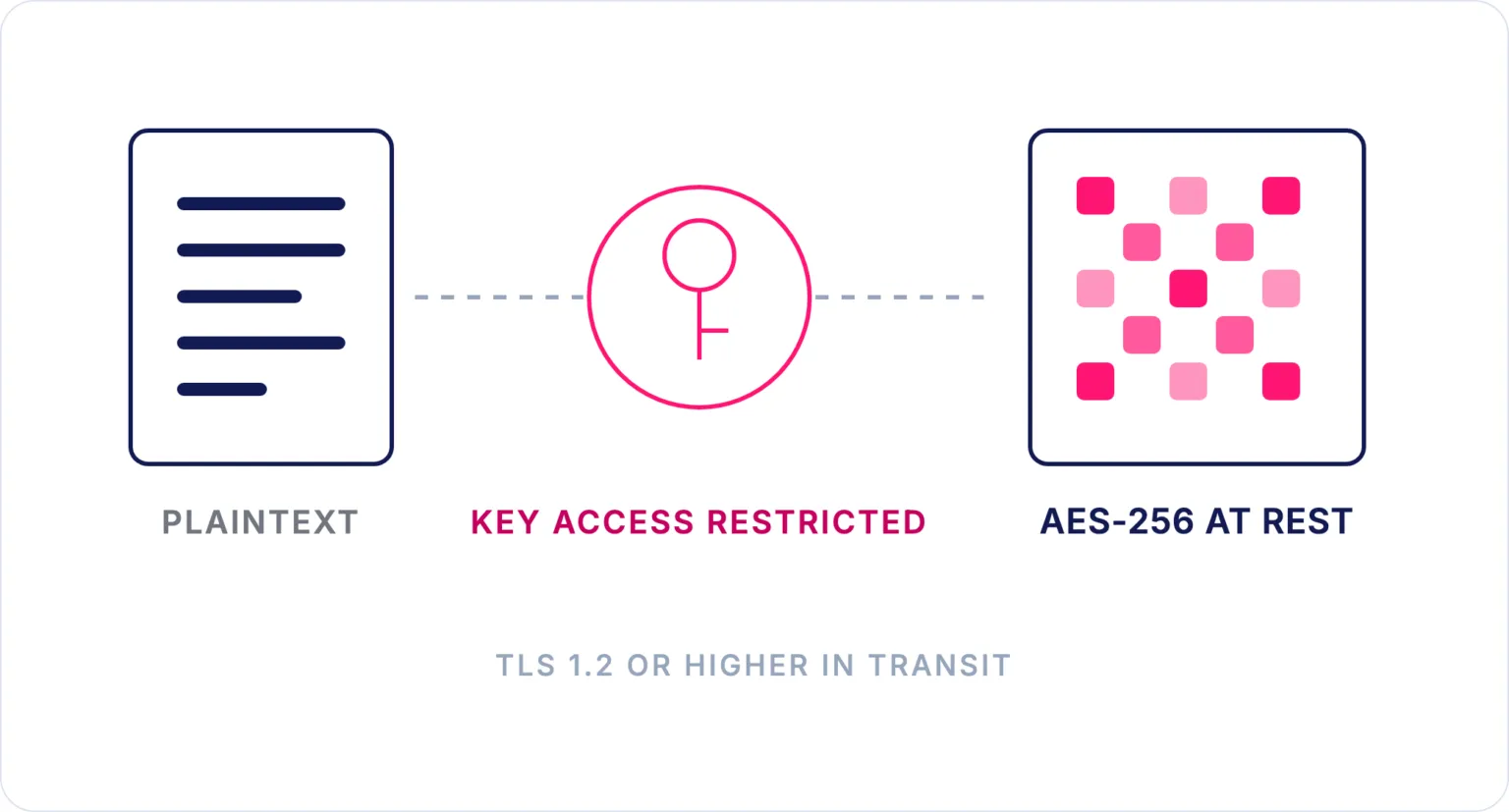
Every datastore holding sensitive customer content is encrypted at rest, every connection is encrypted in transit, and access to the keys that protect it is restricted.
AT REST
Datastores housing sensitive customer data are encrypted at rest, using AES-256.
IN TRANSIT
TLS 1.2 or higher. Confidential and sensitive data is encrypted whenever it is transmitted over public networks.
KEY ACCESS
Privileged access to encryption keys is restricted to authorized users with a business need.
REMOTE ACCESS
Production systems can only be reached over an approved encrypted connection, by authorized employees with a valid multi-factor authentication method.
ASSURANCE
Control self-assessments run at least annually, and corrective actions are completed inside the SLA we have committed to.
One way in, and it is watched
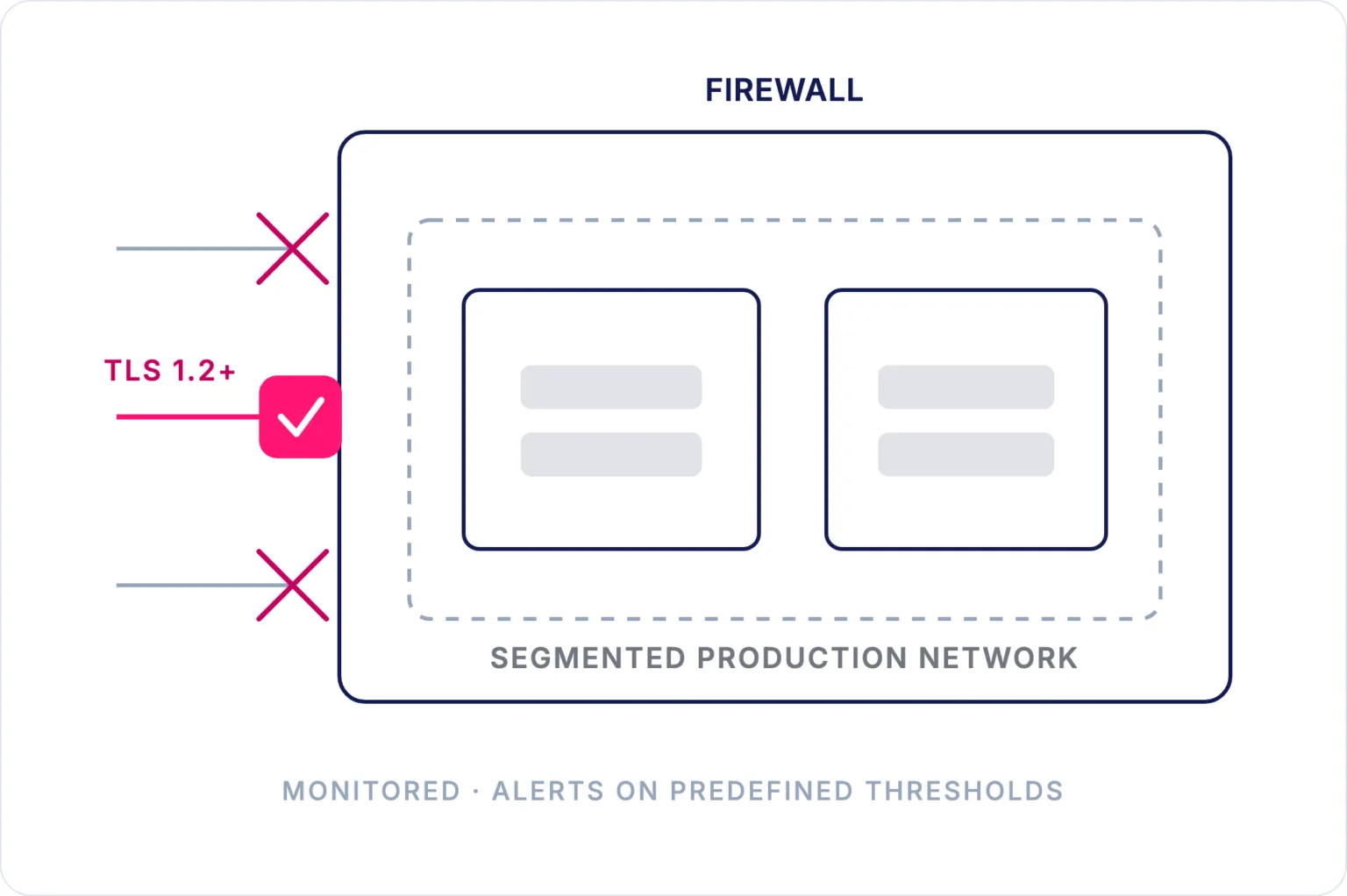
The production network is segmented, the ways into it are restricted and authenticated, and what happens inside is monitored for events with security impact.
SEGMENTATION
The production network is segmented to prevent unauthorized access to customer data.
PERIMETER
Firewalls are configured to prevent unauthorized access. Privileged access to the firewall is restricted, and firewall rulesets are reviewed at least annually.
INGRESS
Privileged access to the production network, databases, operating systems and the production application is restricted to authorized users with a business need.
MONITORING
An infrastructure monitoring tool watches systems, infrastructure and performance, and generates alerts when predefined thresholds are met.
LOGGING
A log management tool identifies events that may have a potential impact on our security objectives.
HARDENING
Network and system hardening standards are documented, based on industry best practices and reviewed at least annually. Infrastructure is patched as part of routine maintenance and in response to identified vulnerabilities.
Nobody has standing access to your content
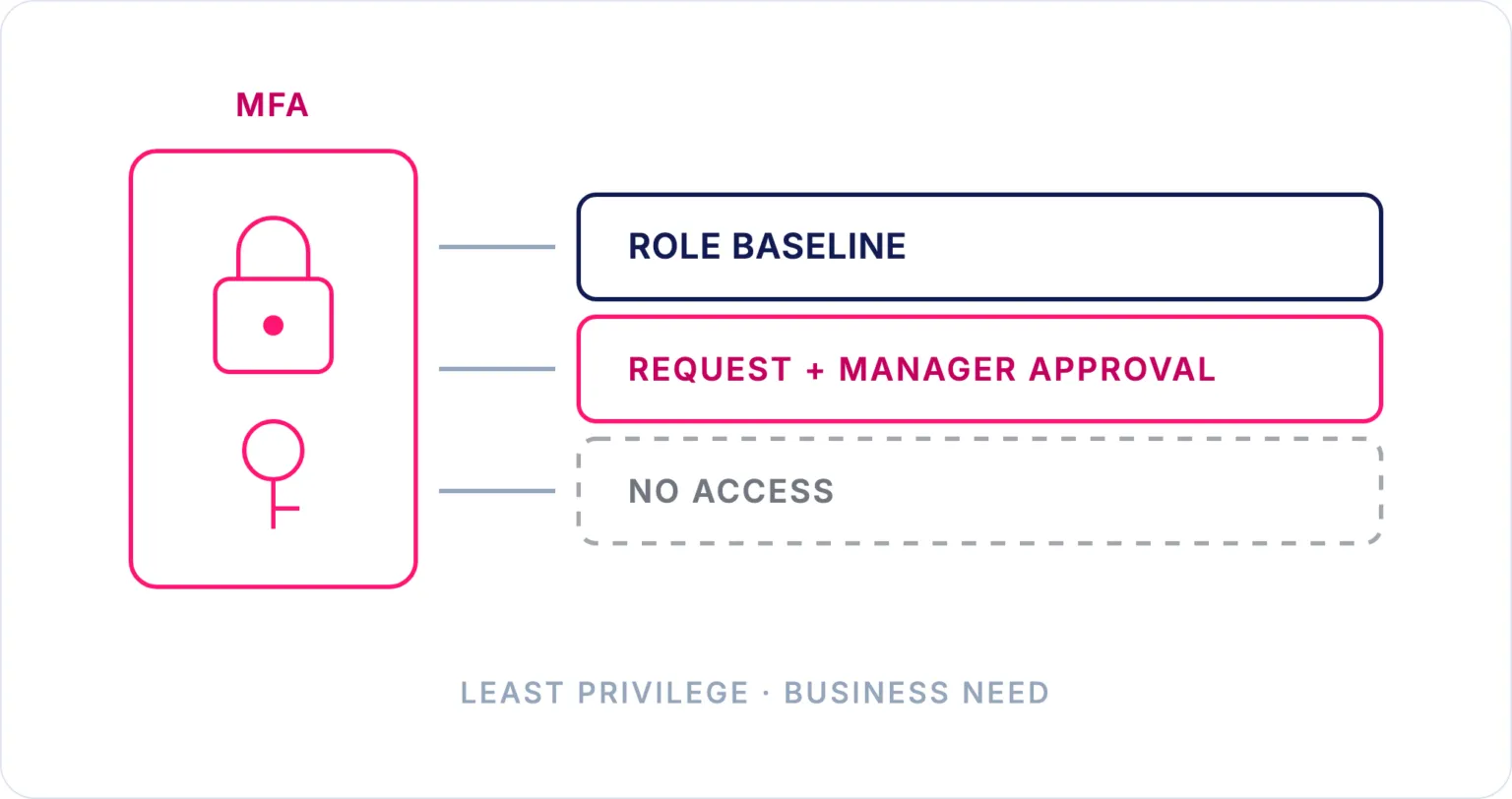
Access follows role and business need, never convenience. The privileged paths to production, to databases, to the firewall and to encryption keys are gated behind multi-factor authentication.
AUTHENTICATION
Multi-factor authentication is required for privileged access to production systems. Authentication uses unique usernames and passwords or authorized SSH keys.
AUTHORIZATION
Access is granted on a least-privilege, role-based basis. Anything beyond a role’s baseline needs a documented access request and manager approval before it is provisioned.
PASSWORDS
Passwords for in-scope system components are configured according to our password policy.
OFFBOARDING
A termination checklist is completed for every leaver, so that access is revoked inside our committed SLA.
WHEN YOU LEAVE
Customer data containing confidential information is purged or removed from the application environment when customers leave the service.
AI AND YOUR DATA
Your content never trains anyone's model. Ours included.
Whale’s AI features run on your documentation to help you write and maintain it. That is the only thing they do with it, and it is a contractual commitment in our Terms rather than a setting you have to find and switch off.
No training on our models
We do not use your content, prompts, documents or outputs to train, fine-tune or improve our own algorithms or machine-learning models.
No training by our providers
We do not permit third-party AI providers to use your content to train their models, and our written agreements with vendors carry confidentiality and privacy commitments.
Metadata only, never substance
We use technical metadata such as feature usage frequency and system logs to optimize the service. That is separate from the substance of what you write.
Aggregate insight stays anonymous
Anonymized, aggregated data is used for product improvement only where it cannot reasonably identify you or any individual.
The people with access are vetted and bound
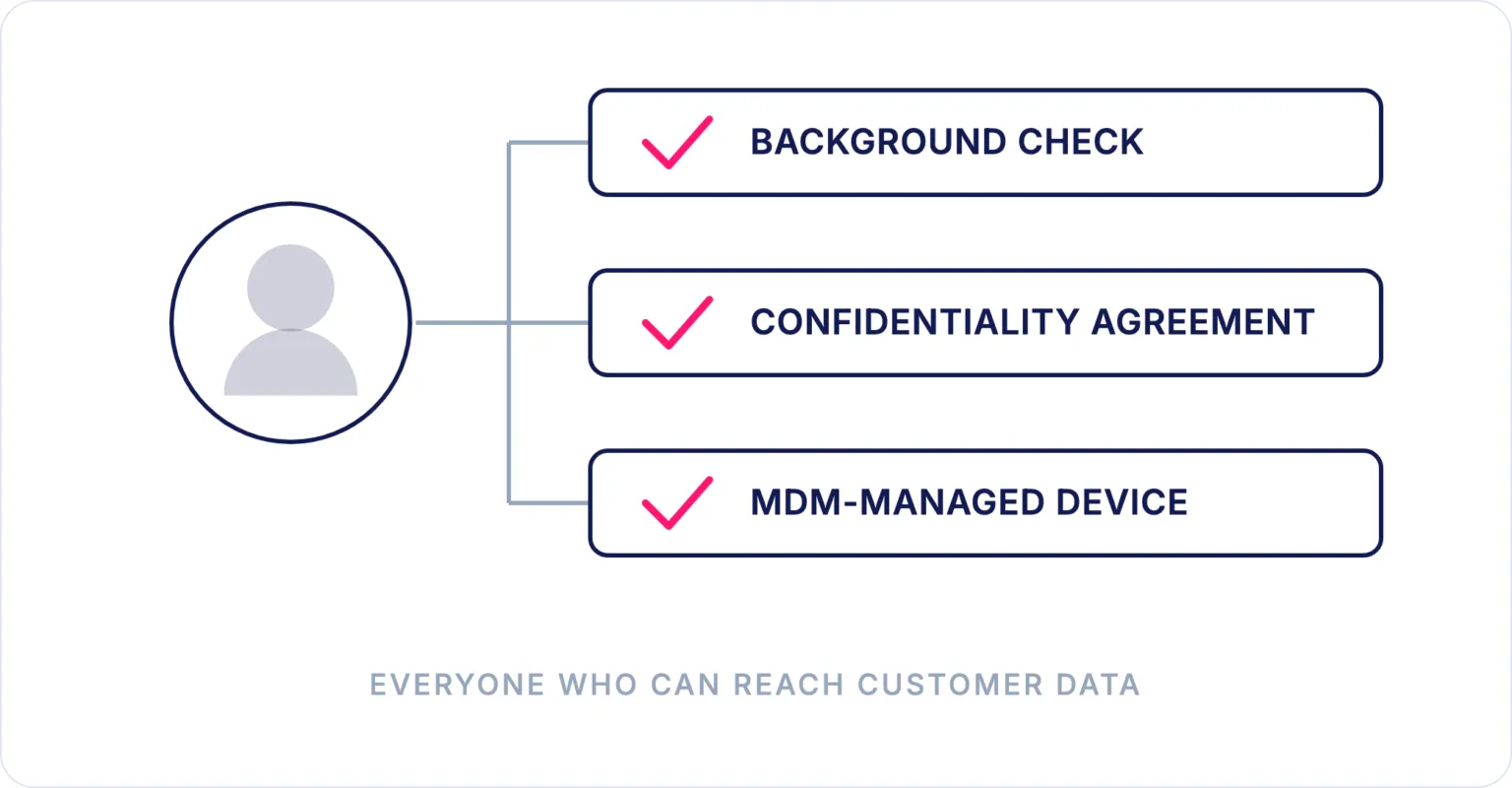
Everyone who can reach customer data is screened before they start, contractually bound to keep it confidential, and working from a device we manage centrally.
SCREENING
Background checks are performed on new employees.
CONTRACTS
Employees sign a confidentiality agreement during onboarding, and contractors sign one at the time of engagement.
DEVICES
A mobile device management system centrally manages the devices that support the service.
ASSETS
A formal inventory of production system assets is maintained.
ACCOUNTABILITY
Roles and responsibilities for designing, operating and monitoring information security controls are formally assigned in job descriptions and our Roles and Responsibilities policy.
Privacy Policy on Whale
Our Privacy Policy, Terms and Conditions, and Cookie Policy are published openly, so you can read exactly how Whale collects, stores and processes your data before you commit to anything.
If your security or legal team needs something those documents do not cover, including our SOC 2 Type 2 report or our list of sub-processors, email security@usewhale.io and we will send it over.
Privacy Policy on Whale
Frequently asked questions
Book a Demo01How can I trust Whale?
Whale is SOC 2 compliant, GDPR compliant and HIPAA ready, and we publish our security posture rather than simply describing it. Every control we hold is monitored continuously.
Our penetration testing is performed at least annually, and we perform control self-assessments at least annually to gain assurance that controls are in place and operating effectively. Our 2025-2026 SOC 2 Type 2 report, our security policies and our list of sub-processors are available on request. Email security@usewhale.io and we will send them over.
02What compliance certificates does Whale have?
Whale is SOC 2 compliant, GDPR compliant and HIPAA ready.
Our 2025-2026 SOC 2 Type 2 report is available on request, alongside our Privacy Policy, our GDPR Compliance Policy and our list of sub-processors. Email security@usewhale.io to request them.
03What product security does Whale have?
Whale holds five product security controls, monitored continuously:
- Data encryption utilized. The company’s datastores housing sensitive customer data are encrypted at rest.
- Control self-assessments conducted. The company performs control self-assessments at least annually to gain assurance that controls are in place and operating effectively. Corrective actions are taken based on relevant findings. If the company has committed to an SLA for a finding, the corrective action is completed within that SLA.
- Penetration testing performed. The company’s penetration testing is performed at least annually. A remediation plan is developed and changes are implemented to remediate vulnerabilities in accordance with SLAs.
- Data transmission encrypted. The company uses secure data transmission protocols to encrypt confidential and sensitive data when transmitted over public networks.
- Vulnerability and system monitoring procedures established. The company’s formal policies outline the requirements for the following functions related to IT / Engineering: vulnerability management and system monitoring.