

In this article
If you are evaluating Trainual alternatives, you are probably weighing a genuinely good tool against something more specific your team needs.
Trainual is a well-known name in SOP and onboarding software, and for a lot of teams it does the job well. It has also evolved considerably in the last two years. Most notably it moved to quote-based pricing rather than listing plans publicly, and in October 2025 it acquired Uptick, adding performance management (one-on-ones, goals, engagement tracking) to its platform.
That expansion is a sign of real growth, and it is also worth knowing about if what you actually want is a focused documentation and training tool rather than a broader performance suite.
Depending on what your team needs, a few things are worth weighing before you commit:
- Pricing now requires a conversation. Trainual publishes no prices for any of its four tiers (Core, Pro, Premium and Enterprise) and every call to action is a demo request. The only figure it does publish is a one-time $1,000 implementation fee.
- There is no free plan or free trial. Every route in is a sales conversation, so you cannot try it before you talk to someone.
- There is some learning curve. Some reviewers mention it takes time to get comfortable with how Trainual organizes Company, Policy and Process sections.
- Formatting and real-time co-editing are more basic than some newer tools. If your team collaborates heavily in real time, test this during a trial.
- It targets a particular size of company. Trainual states it is best suited to organizations with 25 to 1,000 employees, which is worth checking against your headcount.
None of this means Trainual is the wrong choice, and plenty of teams are happy with it. But if any of the above matters more to you than it does to the average buyer, here are eleven tools worth evaluating, including where each plays to different strengths.
Full disclosure: We are a competitor to Trainual but we recognize that they have a solid software and wrote this article only to offer alternatives to those who are already looking for them.
Key Takeaways
- Almost half of this category no longer publishes pricing. We checked every vendor’s own pricing page. Trainual, Process Street, Document360, Docebo and Guru publish no prices at all. Whale, Waybook, Scribe, Tango, TalentLMS, ClickUp and Confluence do.
- Trainual acquired Uptick in October 2025, adding performance management to its platform. Worth knowing if you specifically want a tool that stays focused on SOPs and onboarding.
- Not every alternative solves the same problem. These eleven split into four categories: documentation plus onboarding, workflow execution, dedicated training platforms, and general work management. Picking by category first saves time.
- Genuinely free plans are rarer than they look. Whale, Scribe, Tango, Confluence, TalentLMS and ClickUp offer free plans. Document360 and Process Street offer a 14-day trial instead, and Waybook a 7-day one. Docebo, Guru and Trainual offer neither.
- Annual and monthly rates differ by roughly 15 to 30% on the tools that publish them, so every price below states which basis it is on.

Trainual Alternatives by Use Case
Not every tool here solves the same problem, and picking by category first will save you from evaluating tools that were never going to fit. Here is how the eleven break down:
| Tool | Documentation + Onboarding | Workflow Execution | Training Platform | General Work Management |
|---|---|---|---|---|
| Whale | Yes | Yes | Yes | |
| Process Street | Yes | Yes | ||
| Waybook | Yes | Yes | ||
| Document360 | Yes | |||
| Scribe | Yes | |||
| Docebo | Yes | |||
| ClickUp | Yes | |||
| Guru | Yes | Yes | ||
| Tango | Yes | |||
| Confluence | Yes | |||
| TalentLMS | Yes |
If you need documentation and training together, the way Trainual itself is built, start with the first column. If your real problem is making sure a specific process gets followed the same way every time, look at the second. If you are training hundreds or thousands of people and need certifications and compliance reporting, the third fits better than any documentation-first tool will.
How We Evaluated These Tools
We signed up for each tool (except where there was no free plan) and compared them across five factors: pricing transparency, ease of use and setup time, documentation and SOP capability, training and onboarding features, and AI-assisted content creation.
For reference, every price below was checked against the vendor’s own live pricing page in August 2026, in US dollars.
Trainual Alternatives at a Glance
| Tool | Best For | Starting Price | Free Plan | Standout Feature |
|---|---|---|---|---|
| Whale | SOPs, onboarding and training | Free, or $249/mo annually ($399 monthly) | Yes, up to 10 members | AI writes SOPs; Alice AI answers questions |
| Process Street | Enforcing step order in workflows | No published pricing, contact sales | No, 14-day Pro trial | Conditional logic and enforced order |
| Waybook | SOP playbooks with built-in testing | Core $99/mo annually ($119 monthly) | No, 7-day trial | Waybook Shots turns a process into a guide |
| Document360 | Large-scale technical documentation | No published pricing, quote only | No, 14-day trial | Deep version control for big libraries |
| Scribe | Fast capture from screen recordings | $13/seat/mo annually ($17 monthly) | Yes, unlimited guides | One-click recording makes a guide |
| Docebo | Enterprise learning management | No published pricing, quote only | No plan, no trial | Certifications and compliance at scale |
| ClickUp | Docs inside a broader PM tool | $7/user/mo annually ($10 monthly) | Yes, unlimited members | Docs plus full project management |
| Guru | Fast knowledge search for support | No published pricing, quote only | No plan, no trial | AI-verified answers inside Slack |
| Tango | Browser workflow capture | $15/user/mo annually ($20 monthly) | Yes, 5 shared workflows | Captures workflows as you click |
| Confluence | Atlassian-native team wiki | Standard from $680/year, 10 users | Yes, up to 10 users | Rovo AI bundled into Standard |
| TalentLMS | Structured course delivery | $95.20/mo annually ($119 monthly) | Yes, up to 5 users | Publishes full self-serve prices |
Prices verified against each vendor’s own pricing page, August 2026, and Waybook in September 2026. Confluence prices are a sliding scale by seat count, so the figure shown is the annual total for the smallest band; Atlassian’s displayed per-user rate varies with both seat count and billing term.
1. Whale: Best for SOPs, Documentation and Training
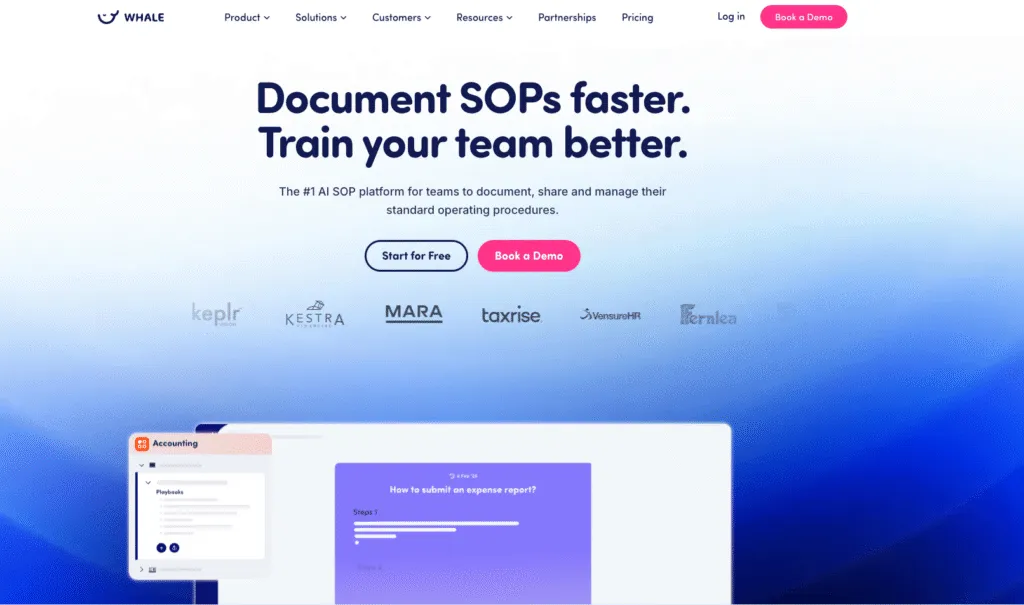
First off, quite honestly, both Whale and Trainual are pretty great. Any company should take its documentation and training seriously, and both platforms will help you structure knowledge and train your teams.
The main differences come down to how Whale has focused on features that cut the time it takes to get a team aligned. That shows up most clearly in speed of setup, AI-assisted content creation, and pricing transparency. On G2, reviewers found Whale easier to use, set up and administer, preferred doing business with Whale overall, felt it met their business needs better, and rated its ongoing product support higher.
Whale pros:
- Capture is built in, not an add-on. Step Recorder, Video-to-Guide Recorder and the Video-to-Guide Convertor turn a screen recording or an existing video into a written SOP, and the AI SOP Writer drafts from rough notes. All four are on the free plan, and more than 100 process templates mean you are not starting from an empty page.
- Your SOPs are reachable by your AI tools. Whale MCP connects Claude, ChatGPT, Cursor or Gemini to your documentation over OAuth, so an assistant can search your live SOPs and get source-cited answers, and create or update content under that user’s existing permissions with drafts held for review.
- Priced per creator, not per head. Three creators are included on Scale at $249/month billed annually, five on Advance at $499, and additional creators are $29 and $39/month. People who only read and complete training are not priced as editors. Nonprofits get 20% off.
- Training is assigned and tracked, not just published. Read assignments with due dates, training flows built per role, and AI-generated quizzes that check the material landed.
- Analytics and proof that someone was trained. E-signatures capture a handwritten signature with a timestamped record, alongside version history and expert review cycles that flag documentation for its owner to re-approve. That combination is what turns training into something you can show an auditor.
- Also for deskless workers. SOPs can be shared as a printed QR code for the work floor and read on the iOS and Android apps, with e-signature confirmation at the point of work. See our guide to training deskless workers.
Whale cons:
- Permission granularity is tied to your plan. Access permissions are set at board level on Scale, library level on Advance and playbook level on Enterprise, so teams that need tight per-document control on a lower tier will find it restrictive. See the Whale pricing page for what each plan includes.
- AI features run on monthly credits rather than being unmetered. The Free plan includes 20 credits, Scale 50 per creator per month and Advance 100.
- Whale is not the cheapest fit for a very small paid team. The free plan covers up to 10 members, but the first paid tier is $249/month billed annually, which is a real step up once you outgrow it.
- Free forever for up to 10 members with 1 creator, no credit card required.
- Scale is $399/month billed monthly, or $249/month billed annually, with 3 creators included. Additional creators are $29/month.
- Advance is $799/month billed monthly, or $499/month billed annually, with 5 creators included. Additional creators are $39/month.
- Enterprise pricing is available on request.
Trainual pricing: not published. Trainual lists four tiers (Core, Pro, Premium and Enterprise) and every call to action is a demo request. The only figure published on its pricing page is a one-time $1,000 implementation fee. There is no free plan and no free trial.
What do Customers say about Whale?
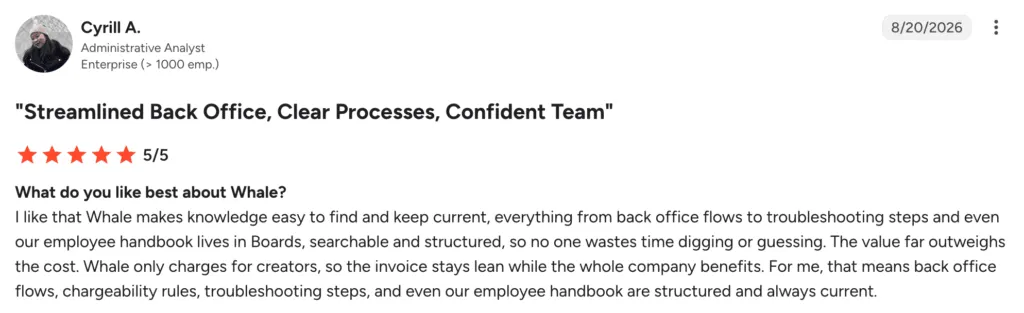
“Whale only charges for creators, so the invoice stays lean while the whole company benefits. The value far outweighs the cost.” – Cyrill A., Administrative Analyst, Enterprise (1000-plus employees), reviewing Whale on G2, 2026
The verdict: if pricing transparency and speed of setup matter to you, Whale has a real structural advantage here. For a direct feature-by-feature view, see our Whale vs Trainual comparison.
2. Process Street vs. Trainual
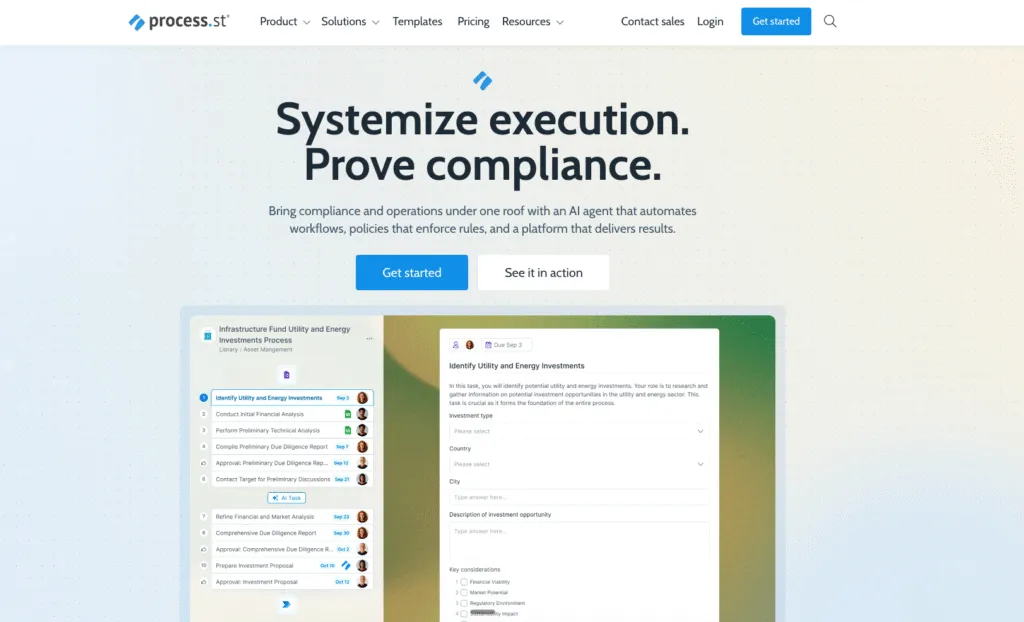
Process Street is a workflow and business process management tool built around enforcing a specific order of steps for recurring processes. That puts it closer to compliance-and-checklist territory than documentation-and-training territory.
Pros:
- Intuitive interface for both technical and non-technical users
- Highly customizable templates with conditional logic
- Automations can be scheduled or triggered on a recurring basis
- Generous functional limits, with unlimited workflows, tasks, forms and pages on every tier
Cons:
- Pricing is fully sales-gated, with no public figures for any of its three tiers
- No free plan at all, only a time-limited trial
- Steeper learning curve for teams new to business process management concepts
Pricing: not published. Startup, Pro and Enterprise are all contact-sales. A 14-day free trial of the Pro plan is available with no credit card required. The published Startup limits are 5 users and 10 guests, with unlimited workflows and up to 5,000 data-set records.
3. Waybook vs. Trainual
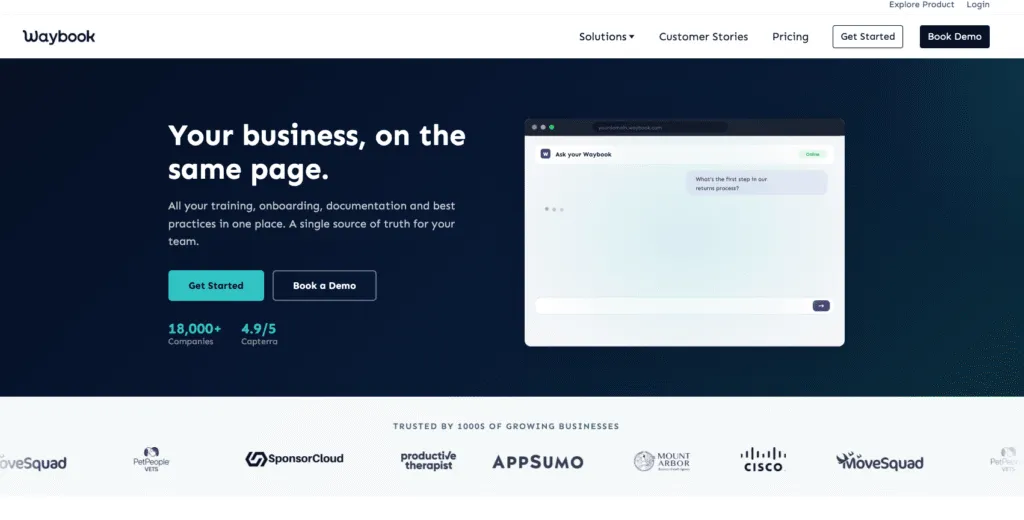
Waybook is an SOP, onboarding and training platform for growing service businesses, built around a structured operating playbook rather than a training manual. Processes are drafted with AI from notes or captured as step-by-step visual guides with Waybook Shots, organized by team, department and role, and assigned with read confirmations and tests so you can see who has understood what.
Pros:
- AI Content Writer drafts SOPs from rough notes, and Waybook Shots turns a process into a visual step-by-step guide, both on the entry plan
- Step revisions keep a history of every change, and team members can ask a question in plain language and get an answer drawn from your own processes
- Training built in: onboarding flows, read confirmations, tests and progress tracking per person
- Published pricing with monthly and annual rates, 20 members included on every paid plan, plus a mobile app and Slack and Microsoft Teams integrations
Cons:
- No free plan, only a 7-day free trial
- Advanced permissions, audit log, document verification and SSO sit on the Pro tier, not Core
- Smaller prebuilt template library than Trainual
Pricing: Core is $119/month billed monthly or $99/month billed annually, with 20 members included and additional members at $6 or $5 each. Pro is $238/month billed monthly or $198/month billed annually, with 20 members included and additional members at $12 or $10 each. Enterprise pricing is available on request.
4. Document360 vs. Trainual
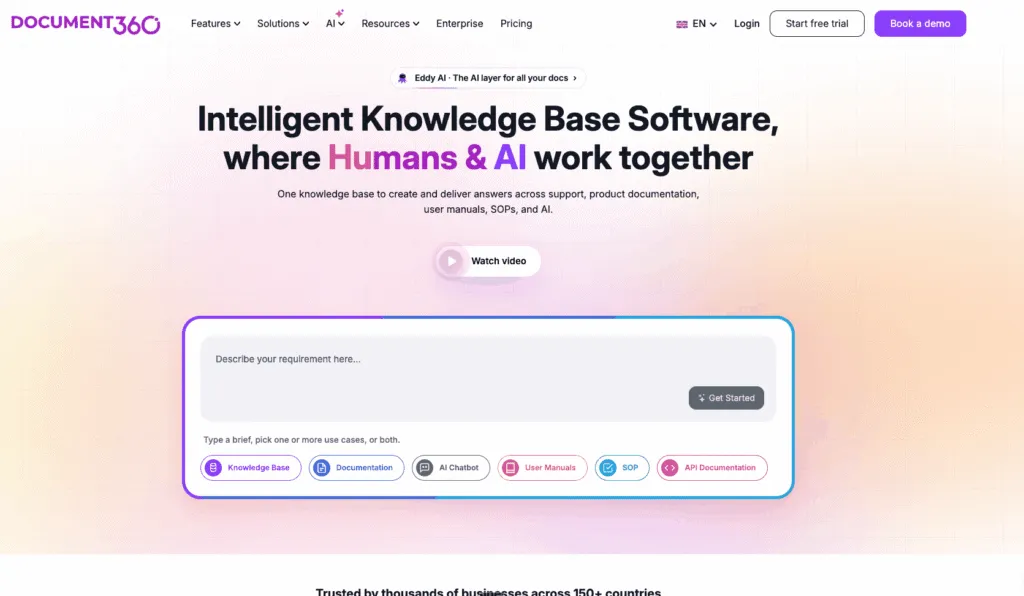
Document360 is built for large-scale knowledge bases, technical documentation and API docs rather than employee onboarding specifically. It is a strong choice if documentation depth matters more than training workflows.
Pros:
- Strong customization for branded, on-brand knowledge bases
- Clean editor that does not require technical skill
- Solid version control for teams managing frequently-updated content
- A 14-day free trial gives full feature access before you commit
Cons:
- No published pricing at all: the pricing page is a three-step quote wizard ending in a form
- No free plan, only the 14-day trial
- Advanced customization requires some technical comfort
Pricing: not published. Document360 states that it prices around each customer’s configuration, because workspaces, languages, team accounts and AI usage all affect the plan. A 14-day free trial is offered, after which pricing is quoted directly.
5. Scribe vs. Trainual
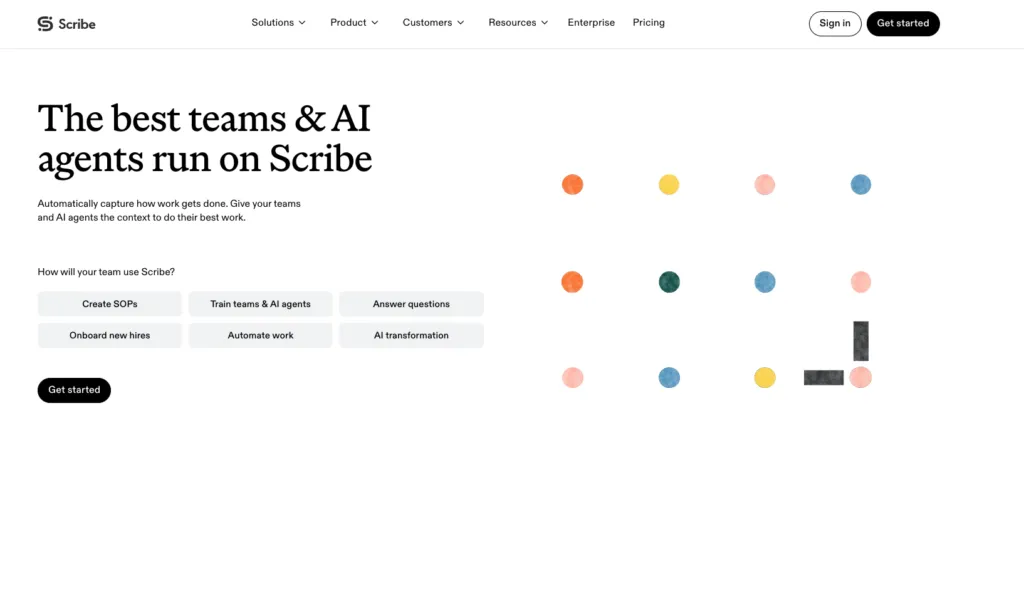
Scribe is an AI-powered capture tool: record yourself doing a task and it auto-generates a step-by-step guide with screenshots. It is a strong fit if fast SOP capture is the priority, less so if you need structured training paths and quizzes.
Pros:
- Genuinely fast, with guides generating automatically from a screen recording
- The free Basic tier includes unlimited guide creation, so it is usable well beyond a trial
- Simple to embed into an existing knowledge base
- Prices are published in USD, including both monthly and annual rates
Cons:
- The team plan starts at 5 seats, which sets a real cost floor for very small teams
- No built-in quiz or structured training-path functionality: it is a capture tool first
- Enterprise pricing is not published
Pricing: Basic is free with unlimited guide creation. Pro Personal is $25/seat/month billed annually or $35 billed monthly, starting at 1 seat. Pro Team is $13/seat/month billed annually or $17 billed monthly, starting at 5 seats. Enterprise is custom. Pro Team is cheaper per seat than Pro Personal because it is the volume-priced plan.
6. Docebo vs. Trainual
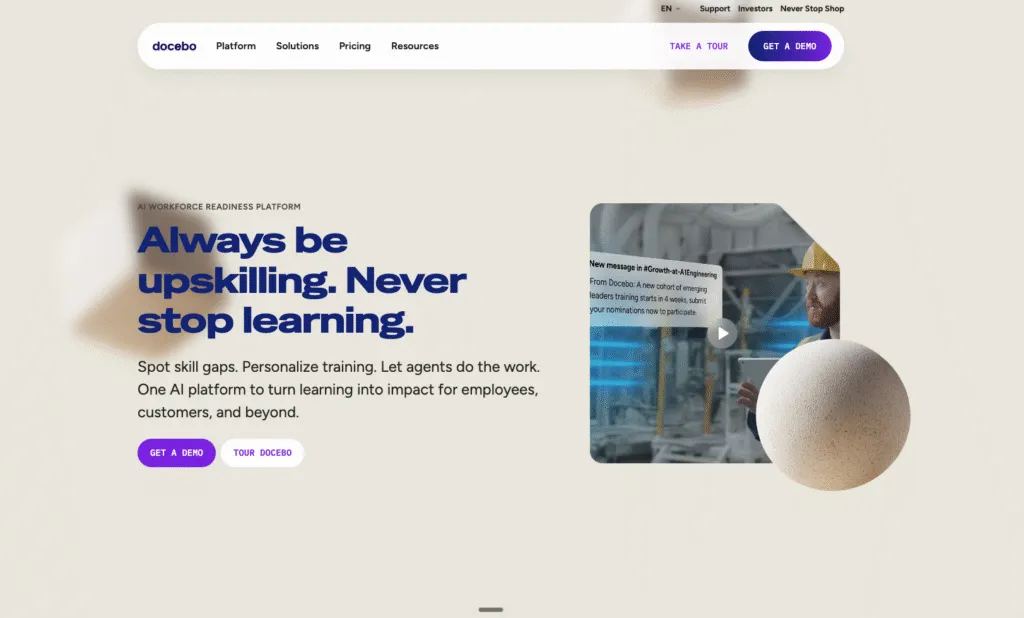
Docebo is an enterprise-grade learning management system built for organizations training employees, partners and customers at scale. It is a heavier tool than Trainual in both capability and cost.
Pros:
- Strong mobile apps for learning on the go
- Social learning features, discussion forums and user-generated content
- More than 400 integrations for enterprise tech stacks
Cons:
- No published pricing: two tiers are named (Elevate and Enterprise) but neither carries a figure
- No free plan and no free trial, so evaluation requires a sales process
- Aimed at organizations training at least 250 learners, so it is a poor fit for small teams
- Support experience gets mixed reviews for response times
Pricing: not published. Docebo quotes by product tier and active-user count, using monthly, yearly or registered active-user models. The only published commitment detail is a minimum contract length of one year, with most customers on three to five years. Setup fees are scoped during the sales process.
7. ClickUp vs. Trainual
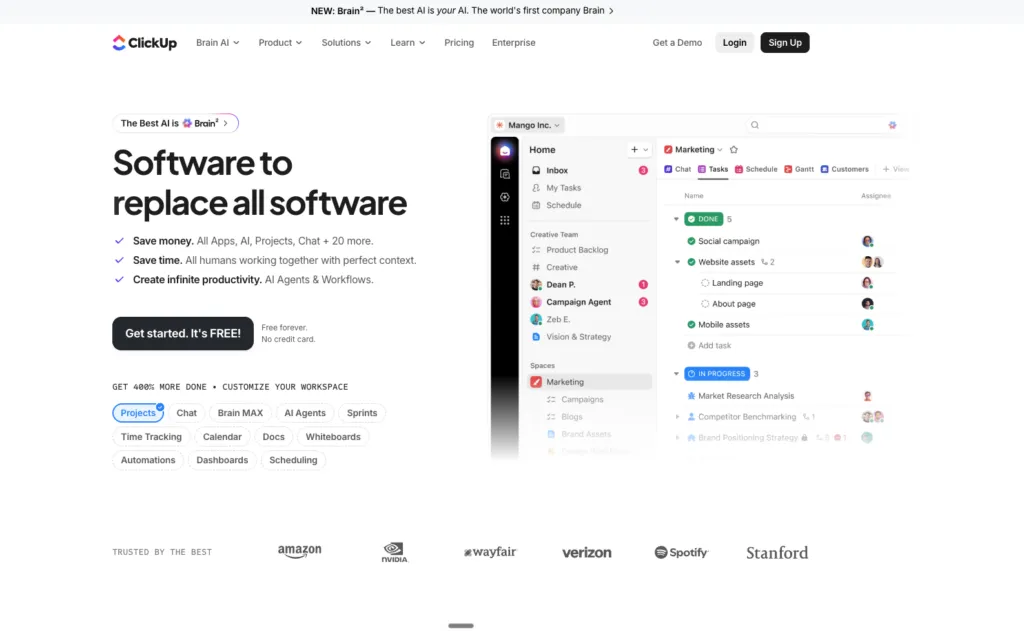
ClickUp is a general project management platform with a Docs feature, not a dedicated SOP or training tool. It is worth considering if you want documentation bundled inside a broader work management system rather than as a standalone product.
Pros:
- Genuinely all-in-one: tasks, docs, goals and time tracking in a single platform
- Generous free plan with unlimited members
- Reduces the number of separate tools a team pays for
- Publishes both monthly and annual rates for every tier
Cons:
- Steep learning curve given the breadth of features
- ClickUp Docs is one feature among many, not built for structured training or onboarding
- AI is a paid add-on: ClickUp Brain is a flat $9/user/month on top of your plan
Pricing: Free Forever is $0 with unlimited members. Unlimited is $7/user/month billed annually or $10 billed monthly. Business is $12/user/month billed annually or $19 billed monthly. Enterprise is contact-sales. ClickUp Brain adds $9/user/month, and the broader Everything AI add-on is $28/user/month.
8. Guru vs. Trainual
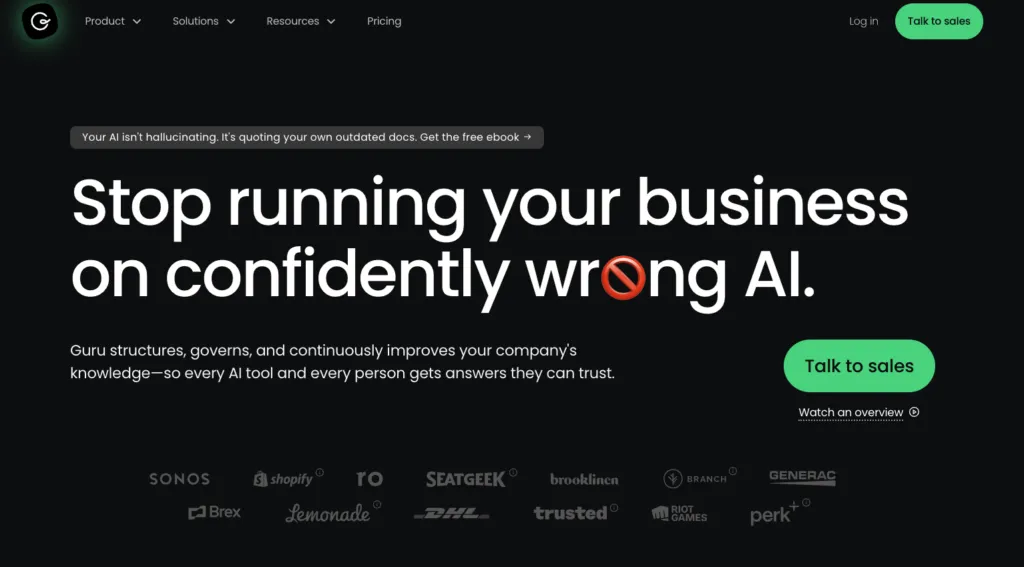
Guru is a knowledge management platform built around AI-verified answers surfaced directly in Slack and browser tools. It is strongest for support and sales teams that need fast, trusted answers rather than structured onboarding flows.
Pros:
- AI-verified knowledge cuts down on outdated or conflicting documentation
- Browser extension and Slack integration put answers where people already work
- Strong for support and sales teams specifically
- A reduced-cost programme is available for registered nonprofits
Cons:
- No published pricing of any kind: no tier names, no per-seat rate and no seat minimums
- No free plan and no free trial, so every evaluation starts with a sales call
- Not built for structured onboarding paths, quizzes or training completion tracking
Pricing: not published. Guru positions itself as a platform-and-expertise engagement rather than a per-seat tool, and states that pricing is scoped to each organization’s scale, knowledge complexity and AI maturity during a first conversation.
9. Tango vs. Trainual
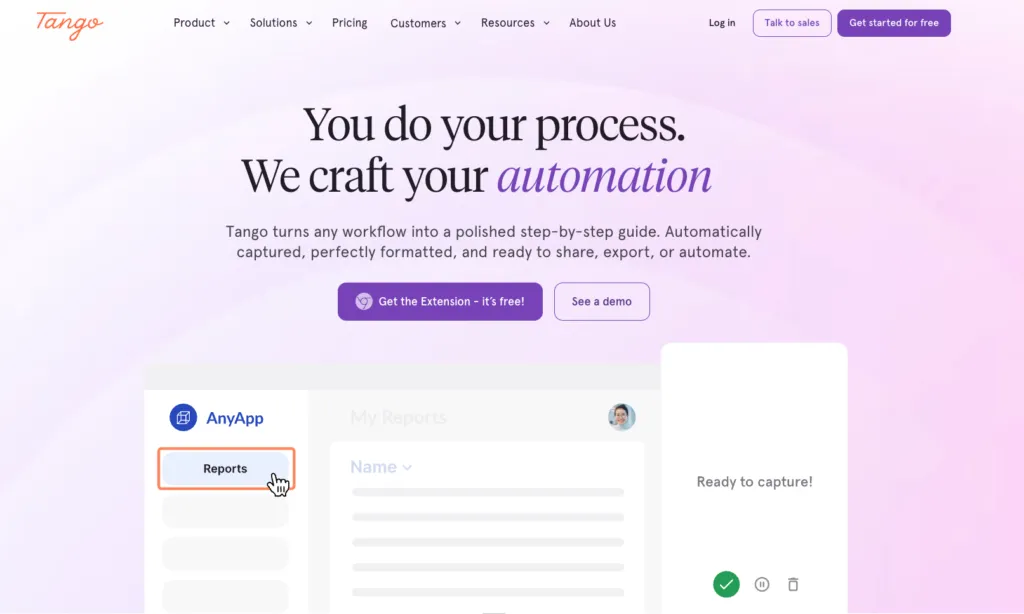
Tango captures workflows automatically as you click through them in your browser, turning a process into a step-by-step guide with screenshots and no manual recording. It is a workflow execution tool first, not a training platform.
Pros:
- Genuinely fast capture, with guides building themselves as you work through a process
- In-app guidance can surface steps inside the tool being documented
- The free tier is usable for a small team testing the workflow
- Publishes both monthly and annual rates for each seat band
Cons:
- The free tier caps at 5 shared workflows, so it runs out quickly in real use
- Not built for structured training paths, quizzes or onboarding sequences
- No API access at any tier
Pricing: Free covers 5 shared workflows and up to 10 users per workspace. Pro is $15/user/month billed annually or $20 monthly for 3 or more users, and $22/user/month billed annually or $26 monthly for 1 to 2 users, with unlimited workflows. Enterprise is custom, priced on a platform fee by number of users supported.
10. Confluence vs. Trainual
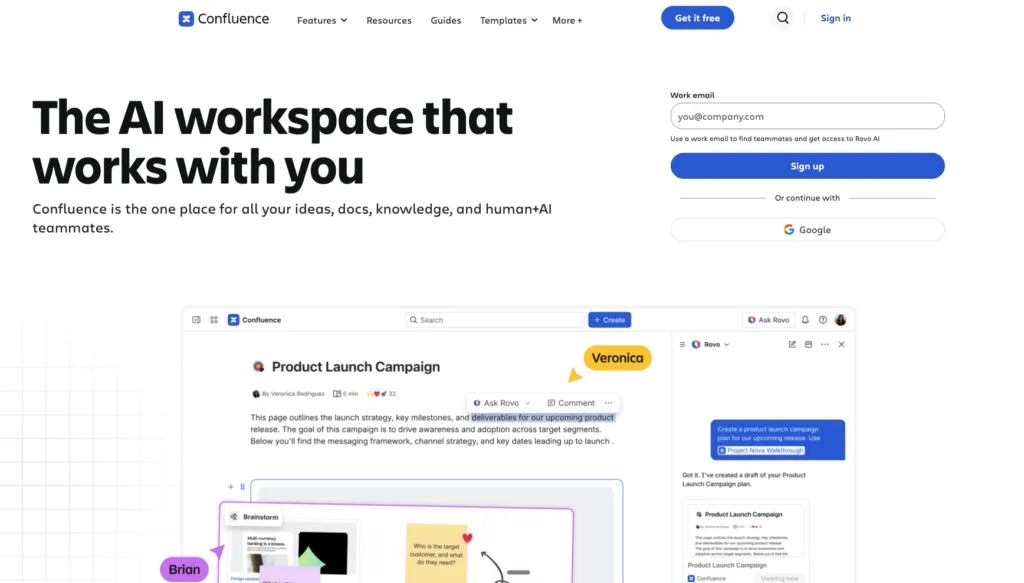
Confluence is Atlassian’s enterprise wiki, built for teams already working inside Jira and the wider Atlassian ecosystem. It is a documentation tool at its core rather than a training or onboarding platform, though teams often build onboarding content in it anyway.
Pros:
- Affordable at scale, particularly for teams already paying for Jira
- Rovo AI (search, chat and agents) is bundled into the Standard tier rather than sold separately
- Deep integration with the rest of the Atlassian suite
- A genuinely free forever tier for up to 10 users
Cons:
- Not built for structured training, quizzes or onboarding completion tracking
- Best value is realized mainly by teams already in the Atlassian ecosystem
- Pricing is a sliding scale by seat count, which makes true cost harder to compare at a glance
- Atlassian has applied repeated price increases in recent years
Pricing: Free forever for 10 users. Paid plans are a sliding scale by seat count: Standard starts at $680/year for up to 10 users, or $6.70/user/month on monthly billing between 1 and 100 seats. Premium starts at $1,300/year for up to 10 users, or $13.20/user/month monthly. Enterprise is annual-billing only, starting at $2,100/year for up to 10 users. Because the rate moves with both seat count and billing term, check your own band on Atlassian’s pricing page.
11. TalentLMS vs. Trainual
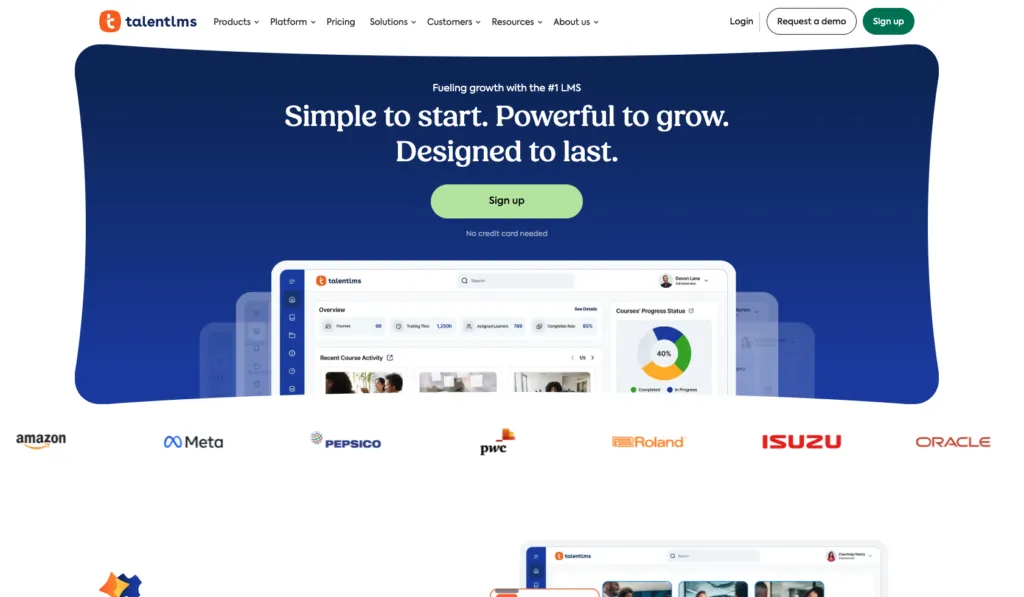
TalentLMS is a straightforward learning management system built for delivering structured courses, and it is the one tool in this comparison that still publishes full self-serve pricing, which makes it a genuine point of contrast with Trainual’s move to quote-only.
Pros:
- Transparent, published pricing with monthly and annual rates and clear seat bands
- Clean, simple interface that is fast to set up
- A free tier with no time limit and no credit card required
- Unlimited support on every plan, including the free one
Cons:
- Pricing is based on registered users by default rather than active ones, unless you add the Flex add-on
- Less suited to freeform SOP documentation than dedicated tools like Whale or Document360
- AI features are locked to higher tiers
Pricing: Free for up to 5 users and 10 courses, with no time limit and no credit card. Core is $95.20/month billed annually or $119 billed monthly for 1 to 40 users. Grow is $183.20/month annually or $229 monthly, and Pro is $359.20/month annually or $449 monthly. Enterprise is contact-sales. A separate Flex add-on switches billing to monthly active users.
Which Trainual Alternative Should You Choose?
- Choose Whale if you want documentation and training together, with published pricing and fast AI-assisted setup.
- Choose Waybook if you want a structured operating playbook with onboarding, read confirmations and tests built in, and you are comfortable starting on a 7-day trial rather than a free plan.
- Choose Document360 if your priority is a large, deeply-versioned knowledge base rather than onboarding flows.
- Choose Confluence if your team already lives in Atlassian and you want documentation alongside Jira.
- Choose Guru if support and sales teams need fast, AI-verified answers inside Slack rather than structured courses.
- Choose Process Street if the job is enforcing that a recurring process is followed in the same order every time.
- Choose Scribe or Tango if you mainly need to capture how something is done quickly, and can live without quizzes or training paths.
- Choose Docebo or TalentLMS if you are running structured courses with certifications and compliance reporting at scale. TalentLMS if you want published pricing, Docebo if you need enterprise depth.
- Choose ClickUp if you want documentation bundled inside a broader project management platform rather than as a standalone tool.
We have not included tools like Google Drive or SharePoint here, because they are not true alternatives for SOP and process documentation. They are fine for storing files, but documents dropped there are not structured for sharing, and they cannot be used in a training sequence without being integrated into a purpose-built tool.
The right Trainual alternative depends on whether you need documentation, training, or both. If it is genuinely both, start with Whale for free and see the difference published pricing and AI-assisted setup make.
FAQs on Trainual Alternatives
What is Trainual?
Trainual is an SOP and onboarding platform that helps businesses document processes and train new hires through structured playbooks. It organizes content into Company, Policy and Process sections, and in October 2025 it expanded into performance management by acquiring Uptick, adding one-on-ones, goals and engagement tracking alongside its original documentation and training tools. Trainual states it is best suited to companies with 25 to 1,000 employees.
What is a good alternative to Trainual?
Whale is the closest alternative for most teams leaving Trainual, because it does the same two jobs in one tool: documentation and structured training. Alongside Waybook, it is one of only two tools on this list that publish pricing while covering both. Whale is free for up to 10 members with 1 creator, and paid plans start at $249/month billed annually with 3 creators included. Trainual publishes no prices for any of its four tiers and lists a one-time $1,000 implementation fee, so Whale is the option where you can work out your cost before you speak to anyone.
Whale is not the right pick if you need certifications and compliance reporting for hundreds of learners, where TalentLMS or Docebo fit better.
How do I evaluate a Trainual alternative?
Focus on a few things: whether the tool covers documentation, training or both; pricing transparency and total cost; ease of use and setup time; integration with your existing tools; and the quality of ongoing support. Matching the tool to your actual use case, whether that is documentation, workflow execution or structured training, narrows the list quickly. Note that half the tools in this category now require a sales conversation before you can see a price at all.
Is there a free alternative to Trainual?
Yes, several. Whale is free forever for up to 10 members, Confluence is free forever for 10 users, TalentLMS is free for up to 5 users and 10 courses with no time limit, Scribe’s free Basic tier includes unlimited guide creation, Tango is free for 5 shared workflows, and ClickUp has a Free Forever plan with unlimited members. Document360 and Process Street offer 14-day trials rather than free plans, Waybook offers a 7-day trial, and Docebo, Guru and Trainual offer neither.
Is Trainual expensive?
Opinions vary, and cost does come up often in buyer discussions, particularly for small businesses. On this r/managers thread, several commenters say they genuinely like the product but find it pricier than expected on a small team’s budget, which is part of why they went looking for a cheaper option. Trainual no longer publishes pricing for any tier, and does publish a one-time $1,000 implementation fee, so the only way to know whether it fits your budget is to request a quote and compare it against alternatives that publish their rates.
Lisa Steingold is the Content Marketing Manager for Whale. She's authored 4 books and is obsessed with helping teams unlock the next level of growth. (And riding her bicycle)