
Manage
Whale Org Chart
See who does what, where they sit, and who they report to
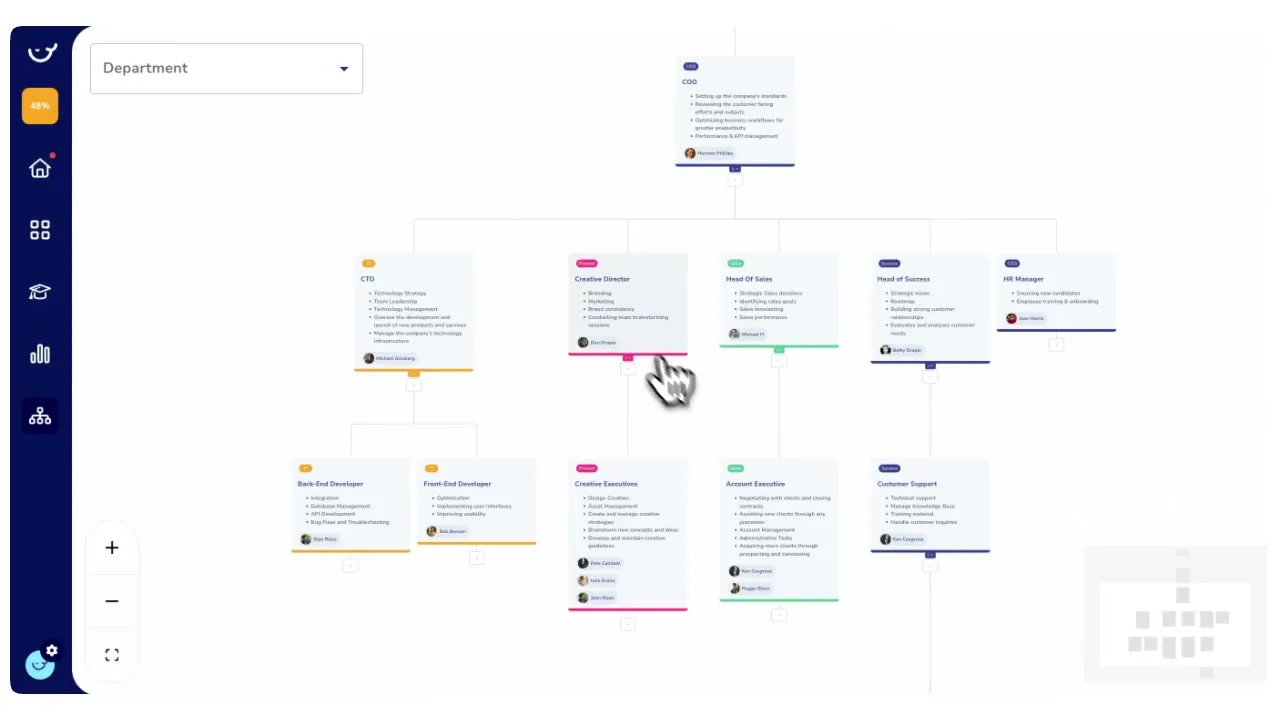
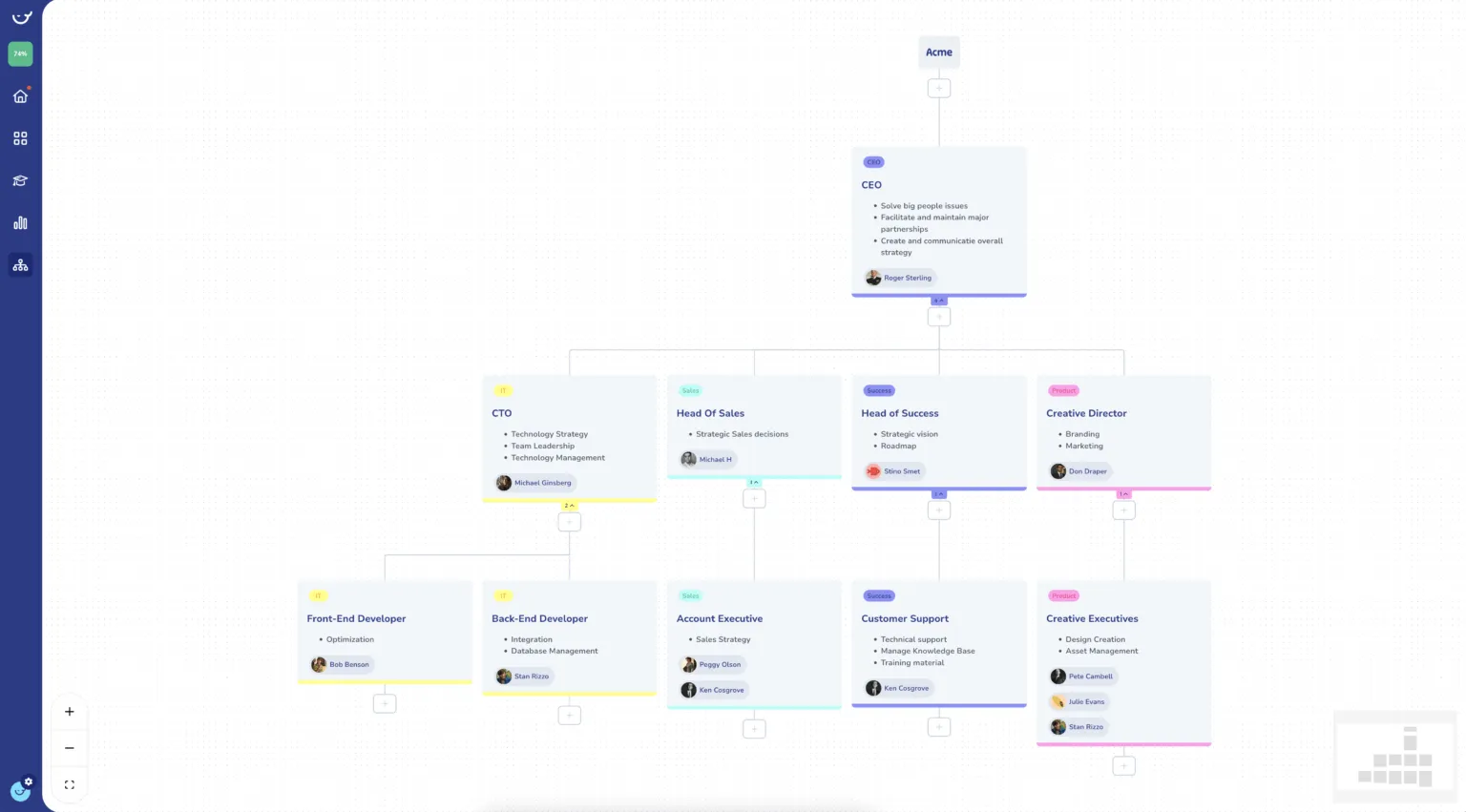
Whale’s org chart pulls from your user profiles. Departments, positions, and reporting lines in one view. Update a role, the chart updates with it. Every position links to the SOPs that role owns.
- 4.8/5 on G2
- SOC 2 certified









The problem
The org chart in a slide deck goes stale the week it's drawn
You already have user profiles for everyone in Whale. Whale builds the org chart from those same profiles, so a change to a department or reporting line in one place reflects everywhere.
How teams do it today: A PowerPoint org chart redrawn every time someone moves
With Whale's Org Chart: A live chart that updates the moment a profile changes
How teams do it today: New hires asking in Slack who owns what
With Whale's Org Chart: New hires find the right person on day one without asking
How teams do it today: Reporting lines nobody can confirm across departments
With Whale's Org Chart: Departments, positions, and reporting lines in one view
How teams do it today: Roles without documented ownership of any process
With Whale's Org Chart: Every role tied to the SOPs and training flows it owns
Who owns this process, and who do I ask
The most common question from any new hire.
- The org chart answers it in two clicks.
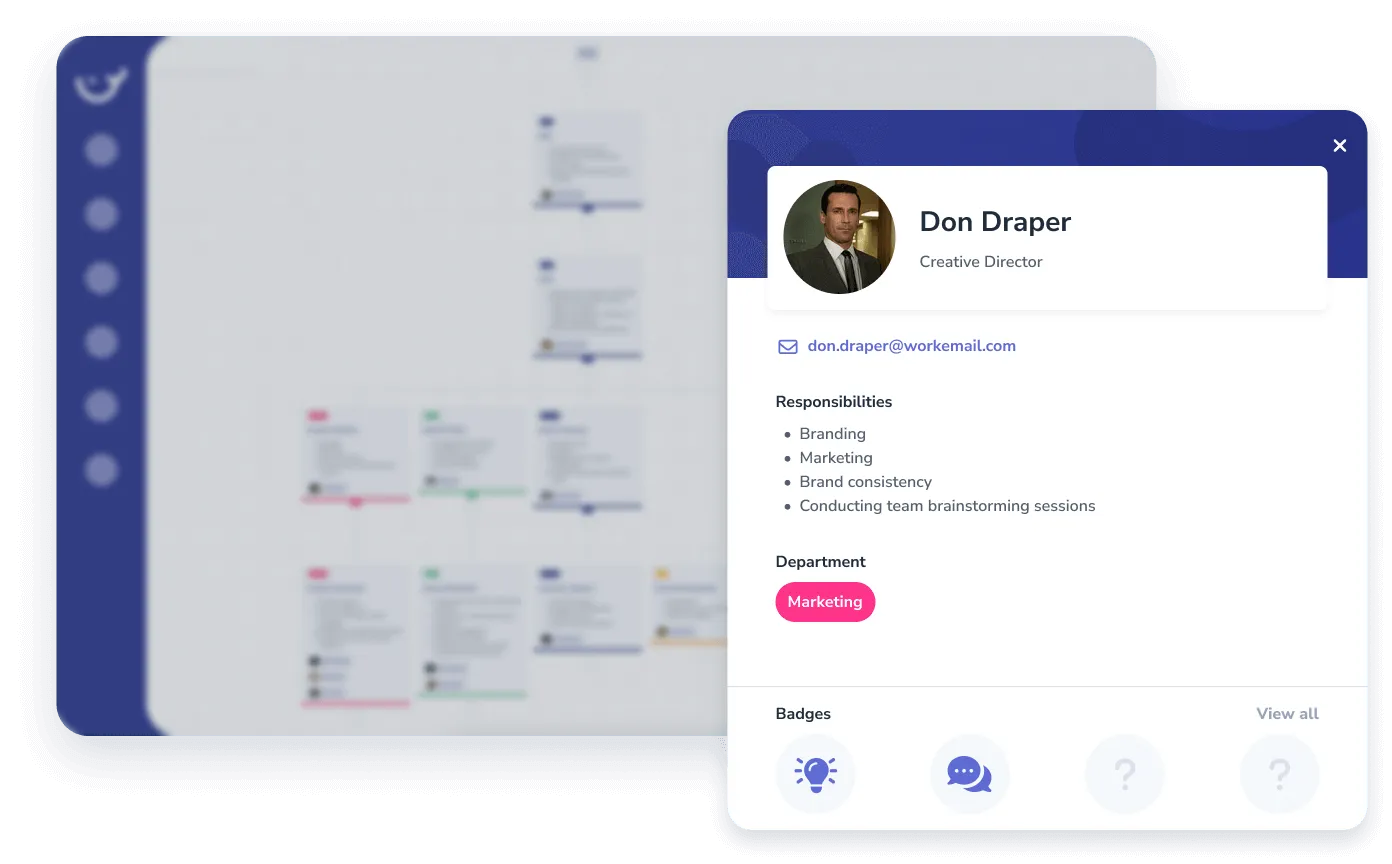
- Open a department, see the positions inside it, click a person to see their role and their manager.
- Every card on the chart is a real Whale user profile, with the same data your admins already maintain.
One profile change, the whole chart updates
Move a person from Support to Customer Success, update their department, promote them into a new position.
- The org chart reflects the change instantly for everyone in the workspace.
- No redraws.
- No stale deck sitting on a shared drive.
- Whoever opens the chart gets the current structure of the company.
Every role linked to the SOPs and training it owns
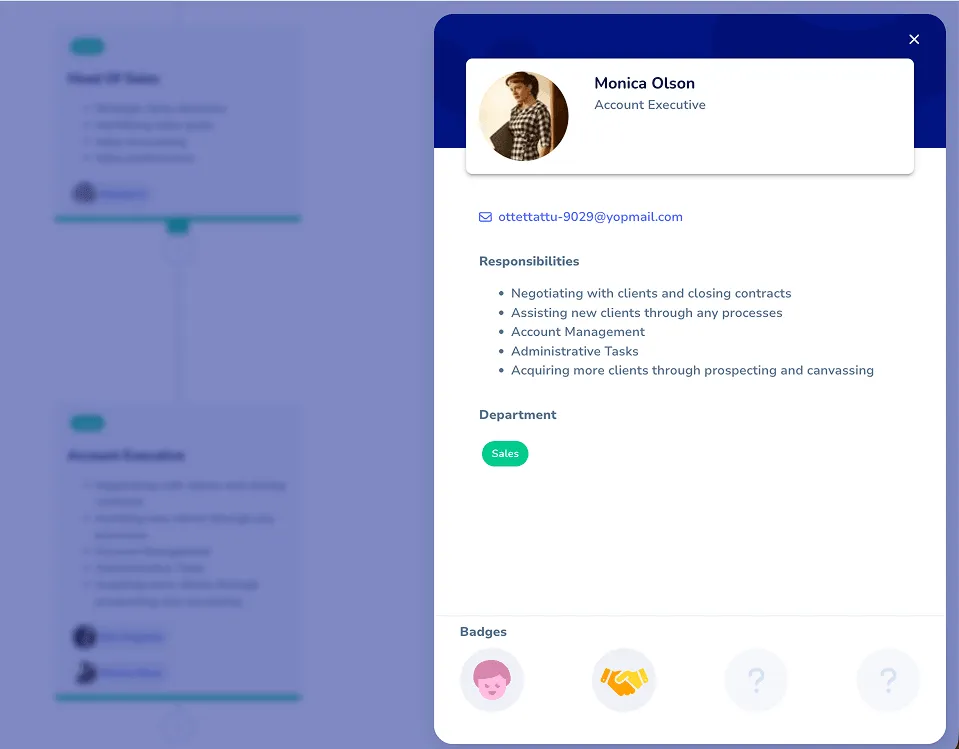
Each position in the chart connects to the playbooks that role runs and the training flow a new hire on that role works through.
- Coral, Whale’s AI assistant, answers role-specific questions from that same content.
- CoPilot surfaces the right SOP inside the tool where the role does the work.
How it works
- 01
Set up departments and positions
Define your departments and positions once in Whale’s admin settings. Assign each user to a department, a position, and a manager. Whale treats that data as the source for the chart.
- 02
The chart builds itself
Whale generates the interactive org chart from your user profiles. Departments, positions, and reporting lines appear in the same view, with every card linked to the person’s profile and the content their role owns.
- 03
Your team navigates and learns the company
New hires open the chart to find their manager, see the wider department, and land on the SOPs and training flow their role runs. Existing teammates use it to find the right owner for a question instead of posting in a general channel.
In their own words
Loved for its overall simplicity and support
“Exceptional Tool for Business Knowledge”
Whale is excellent to document and organize business knowledge. Their AI makes it even easier!
Lyndon S.Small-Business (0-50 emp.) “Whale Keeps Work Organized and Teams Confident”
Whale unifies documentation, training, and reviews in one ecosystem.
Verified User in AccountingMid-Market (51-1000 emp.) “Screen Recorder Transformed Our Productivity”
All features are excellent, but the Screen Recorder has boosted productivity for our company.
Andres A.Enterprise (> 1000 emp.) “User-Friendly Platform with Great Features”
Whale is very user-friendly. "Coral" has been a game changer, makes finding information effortless.
Martha Y.Mid-Market (51-1000 emp.) “Intuitive, fresh and easy!”
Whale's clean layout makes building and navigating SOPs a breeze.
Harley B.Small-Business (0-50 emp.) “Productivity Unleashed!”
Managing and write SOP versions, assign them, track progress through a dashboard, and automate revision tracking.
Verified User in FarmingMid-Market (51-1000 emp.) “My company utilizes Whale for our SOP’s and FAQ’s.”
Everything is very easy to locate and the search bar is my favorite feature. When I need a quick answer I turn to Whale to find what I am looking for.
Georgia R.Mid-Market (51-1000 emp.) “Whale Streamlined Our Processes and Boosted Team Onboarding”
Whale transformed how we manage internal processes. Documenting SOPs is fast and we can build and share training materials in minutes, making onboarding significantly more efficient.
Fábio B.Enterprise (> 1000 emp.) “Whale Keeps Department Training Organized with Boards, Libraries, and Playbooks”
Boards, Libraries, and Playbooks keep training organized by department, so you can generate videos, SOPs, quizzes, and more for each topic.
Ketan T.Mid-Market (51-1000 emp.) “Streamlines Documentation with Ease”
I use Whale for company handbooks, regulations, how-to's, and manuals, all on one platform. The step-by-step screen recorder auto-captures screenshots and saves me about an hour per guide.
Anouk V.Mid-Market (51-1000 emp.) “Effortlessly Streamlines Team Training with Solid Support”
Whale supports training my merchandising teams with AI and video features that break down training step by step. Creating training flows is easy, and quizzes ensure the material lands.
Shelley F.Mid-Market (51-1000 emp.) “Effortless SOP Management with Stellar AI Search”
Whale centralizes all our SOPs with standard formatting and makes them easy to find, especially with the fast AI search across thousands of documents.
Jitender T.Small-Business (50 or fewer emp.)
Frequently Asked Questions
01Does the org chart update automatically when someone changes roles?
Yes. The chart is generated from Whale user profiles. Change someone’s department, position, or manager in admin settings and the chart reflects the change the next time anyone opens it. There is no separate file to redraw, no slide deck to maintain, and no export step. Admins manage structure in one place. Everyone in the workspace sees the same current version.
02Can I connect positions to specific SOPs and training flows?
Yes. Each position in the chart links to the playbooks that role owns and the training flow a new hire on that role completes. A new hire opening their position in the chart lands on the exact content they need on day one. An admin auditing a role sees every SOP attached to it in one view. The connection runs both ways, so changing the role on a playbook updates what shows up on the org chart card.
03Can I navigate the org chart by department?
Yes. Click into any department to see its positions, team members, and internal reporting structure. You can move up to the parent department or across to a sibling department without leaving the view. Large companies with nested departments get a clean drill-down. Smaller teams get a flat view that shows the whole company in one screen.
04Does Coral use the org chart to answer questions about the team?
Yes. Coral, Whale’s AI assistant, uses the same user profile data the org chart is built from. Ask who owns a process, who manages a team, or which position handles a specific workflow, and Coral answers from current data. A new hire can ask Coral in Slack or Teams who to contact about a billing question, and get the right name, role, and department without opening the chart.
05Which plan includes the org chart?
The org chart is a Power-Up add-on available on the Team plan and above. Power-Ups are bundled into the Power-Up add-on package along with comments and threads and custom terminology. Teams that need live company structure mapped to content ownership add the Power-Up on Team or Scale. Enterprise customers get it as part of the standard plan configuration.
06How is this different from drawing an org chart in Lucidchart or a slide deck?
A Lucidchart diagram or a slide is a static drawing. Someone has to remember to update it, and it lives separate from the rest of your company’s knowledge. The Whale org chart is generated from live user data, so the structure matches reality. Every position is also a link into the SOPs that role owns and the training flow it runs, so the chart is not just a picture of the company, it is the entry point into the work each role does.
Other Features
Manage
Advanced Permissions
Control exactly who can view, edit, and manage content across your workspace.
Learn moreTrain
Training Flows
Sequence playbooks, videos, and quizzes into a structured path every new hire runs.
Learn moreTrain
Read Assignments
Push specific content to your team and track who completed it.
Learn more